As an eBay Affiliate, Collector's Key may be compensated if you make a purchase through the link(s) above.
1926
| Weight | 16.718 g |
| Diameter | 27 mm |
| Mint | Philadelphia |
| Strike | Circulation strike |
| Mintage | 1,014,000 |
| Edge | Reeded |
| Alignment | ↑↓ Coin |
| Composition | 90% Gold, 10% Copper |
| Melt value | — |
| Designer | Augustus Saint-Gaudens |
| Collector's Key ID | CK-6419 |
Collection
Your collection
Sign in to track this coin.
One tap — add details later from your collection list.
No additional varieties recorded for this strike.
External references
Last edited: February 4, 2026
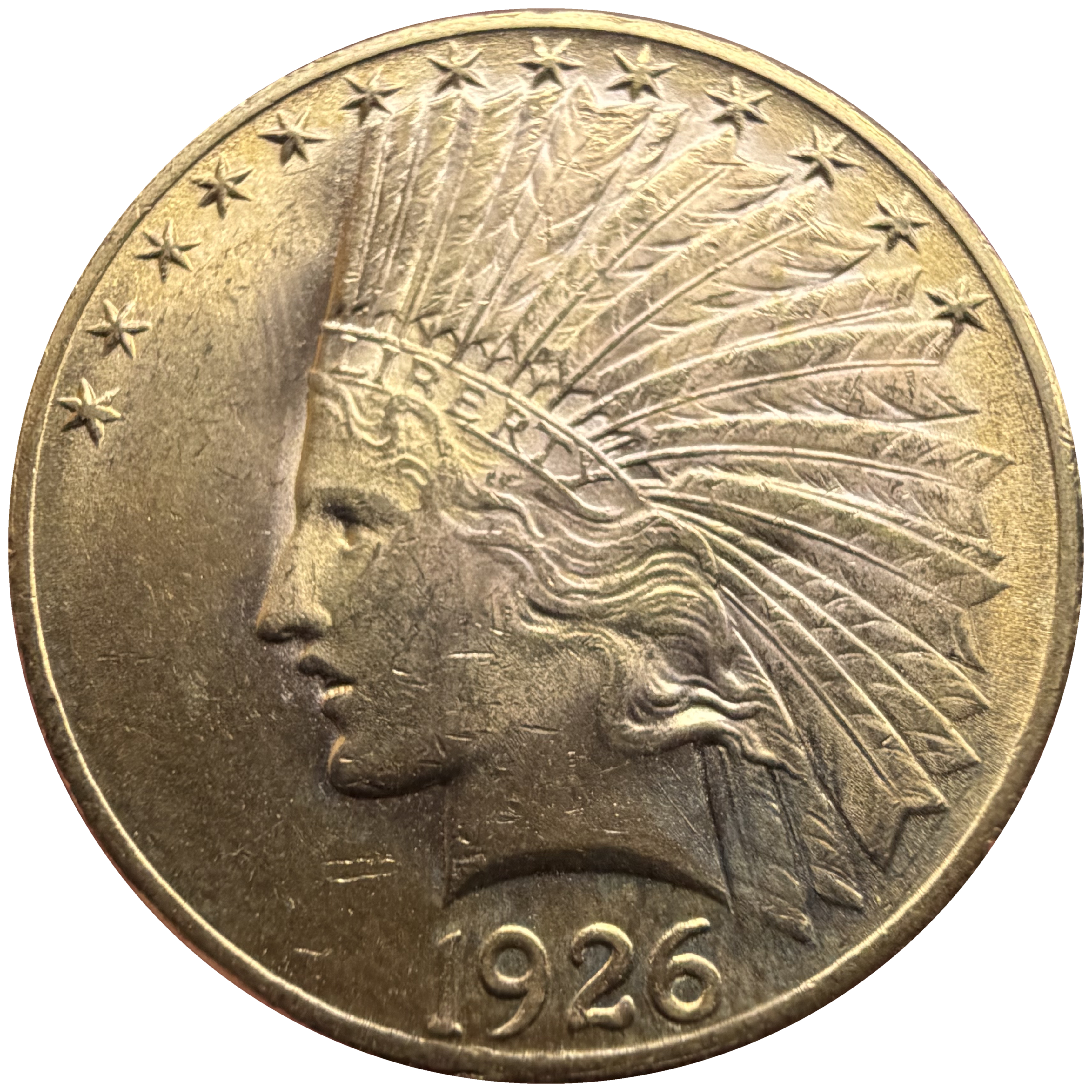
The 1926 Philadelphia eagle stands apart from every other With Motto issue on a single structural fact. Its 1,014,000-piece delivery is the highest mintage Philadelphia ever produced for the Indian Head denomination, and it arrives after the longest Philadelphia drought in the series. No eagle had left the parent mint since the 351,075-piece 1915, leaving an eleven-year gap during which only San Francisco issued the denomination, and then only twice. The resumption was substantial rather than tentative. Treasury demand for gold-clause settlements with overseas trading partners drove the order book, and a meaningful portion of the strike moved directly into European bank reserves rather than domestic circulation. That export pattern shaped survival: many of the high-grade pieces cataloged today entered the U.S. market through repatriation flows decades after striking, returning from foreign vaults that had quietly insulated them from the 1933 recall melts.
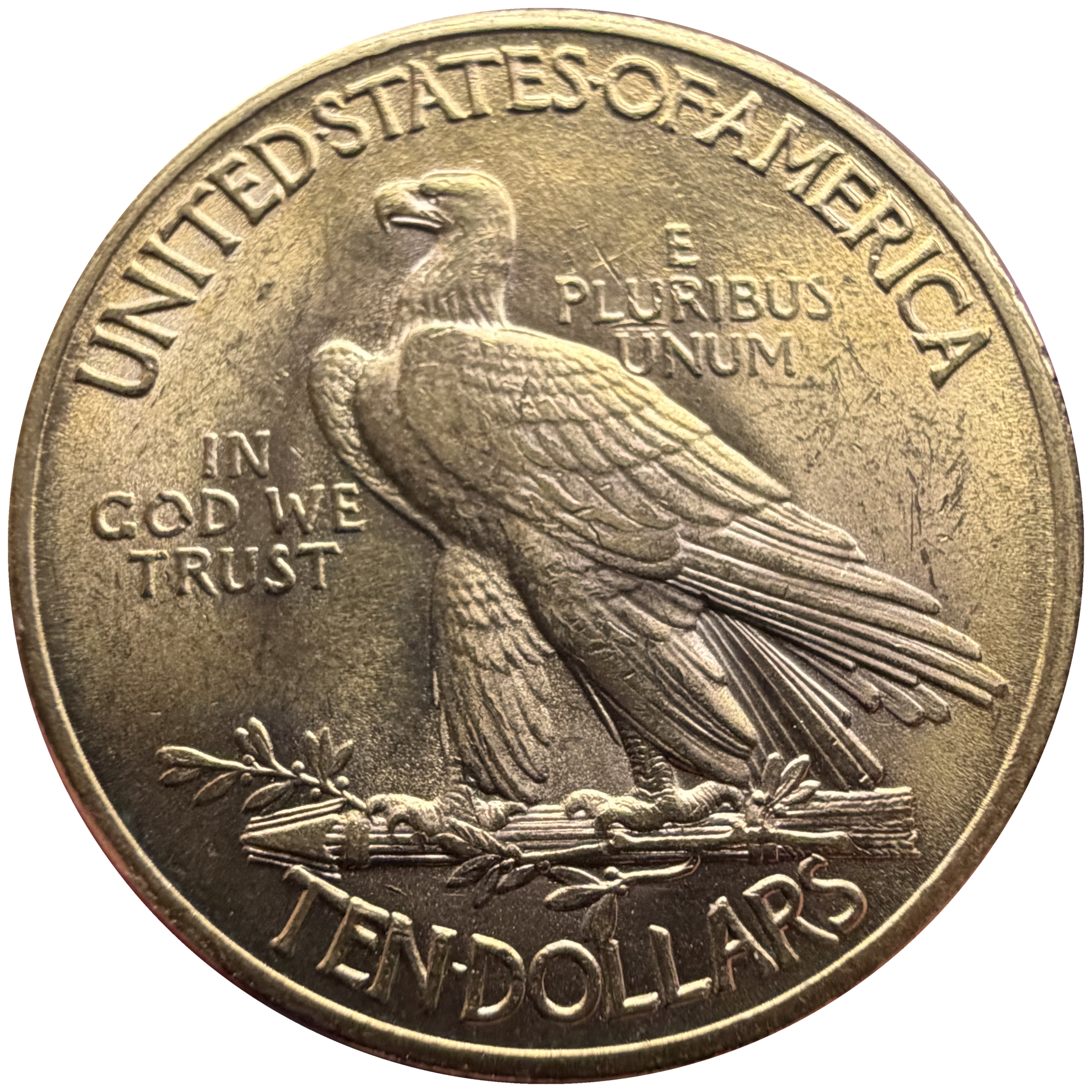
Strike quality on the 1926 runs strong by late-series standards. Headdress feathers show full separation, the eagle's breast carries clean detail, and fields trend toward frosty rather than reflective with the warm orange-gold tone characteristic of original Philadelphia gold from the period. Authentication through PCGS and NGC is routine, with both services having certified the date in volume across every Mint State tier. Population reports place the issue plentifully through MS64, with the grading services collectively reporting examples in the thousands across MS62 through MS64. Numbers narrow at MS65, where the date remains available but no longer common, and tighten meaningfully at MS66. Pieces above MS66 register as condition rarities, and the finest certified examples sit at the MS67 ceiling.
Market behavior tracks the date's dual identity as both bullion-plus carrier and legitimate type representative. Circulated and lower Mint State pieces transact close to gold value with modest numismatic margin, while the premium ladder begins climbing through MS64 and MS65 as eye appeal and CAC approval enter the pricing equation. The benchmark high-grade result remains the PCGS MS66+ that realized $35,250 at Legend Rare Coin Auctions in October 2017, anchoring the condition-rarity tier and reinforcing the date's role as the standard type-coin selection for collectors representing the With Motto Indian eagle in U.S. gold sets. The full mintmark sequence, post-1915 hiatus structure, and recall-era attrition pattern are documented in the Indian Head Eagle series history.
Reference data only — not an appraisal.
| Grade | Description | Low | High |
|---|---|---|---|
| G-4 | Good (G) | — | — |
| VG-8 | Very Good (VG) | — | — |
| F-12 | Fine (F) | — | — |
| VF-20 | Very Fine (VF) | $1,730 | $1,995 |
| EF-40 | Extremely Fine (EF) | $1,780 | $2,055 |
| AU-50 | About Uncirculated (AU) | $1,805 | $2,085 |
| MS-60 | Uncirculated (MS) | $1,855 | $2,140 |
| MS-63 | Choice Uncirculated (MS) | $2,545 | $2,695 |
How much is a 1926 Indian Head Gold $10 Eagle worth?
How many 1926 Indian Head Gold $10 Eagles were minted?
What is a 1926 Indian Head Gold $10 Eagle made of?
What is the melt value of a 1926 Indian Head Gold $10 Eagle?
Is the 1926 Indian Head Gold $10 Eagle a key date?
Live listings from eBay. As an eBay Affiliate, Collector's Key may be compensated if you click a link and make a purchase. See all on eBay →
It is important that you educate yourself on a coin before making a substantial purchase, as some coins on eBay could be counterfeit or misrepresented. eBay Money Back Guarantee protects the buyer in these cases.