As an eBay Affiliate, Collector's Key may be compensated if you make a purchase through the link(s) above.
1857 Flying Eagle
| Weight | 4.67 g |
| Diameter | 19 mm |
| Mint | Philadelphia |
| Strike | Circulation strike |
| Mintage | 17,450,000 |
| Edge | Plain |
| Alignment | ↑↓ Coin |
| Composition | 88% Copper, 12% Nickel |
| Melt value | — |
| Designer | James B. Longacre |
| Collector's Key ID | CK-299 |
Collection
Your collection
Sign in to track this coin.
One tap — add details later from your collection list.
No additional varieties recorded for this strike.
External references
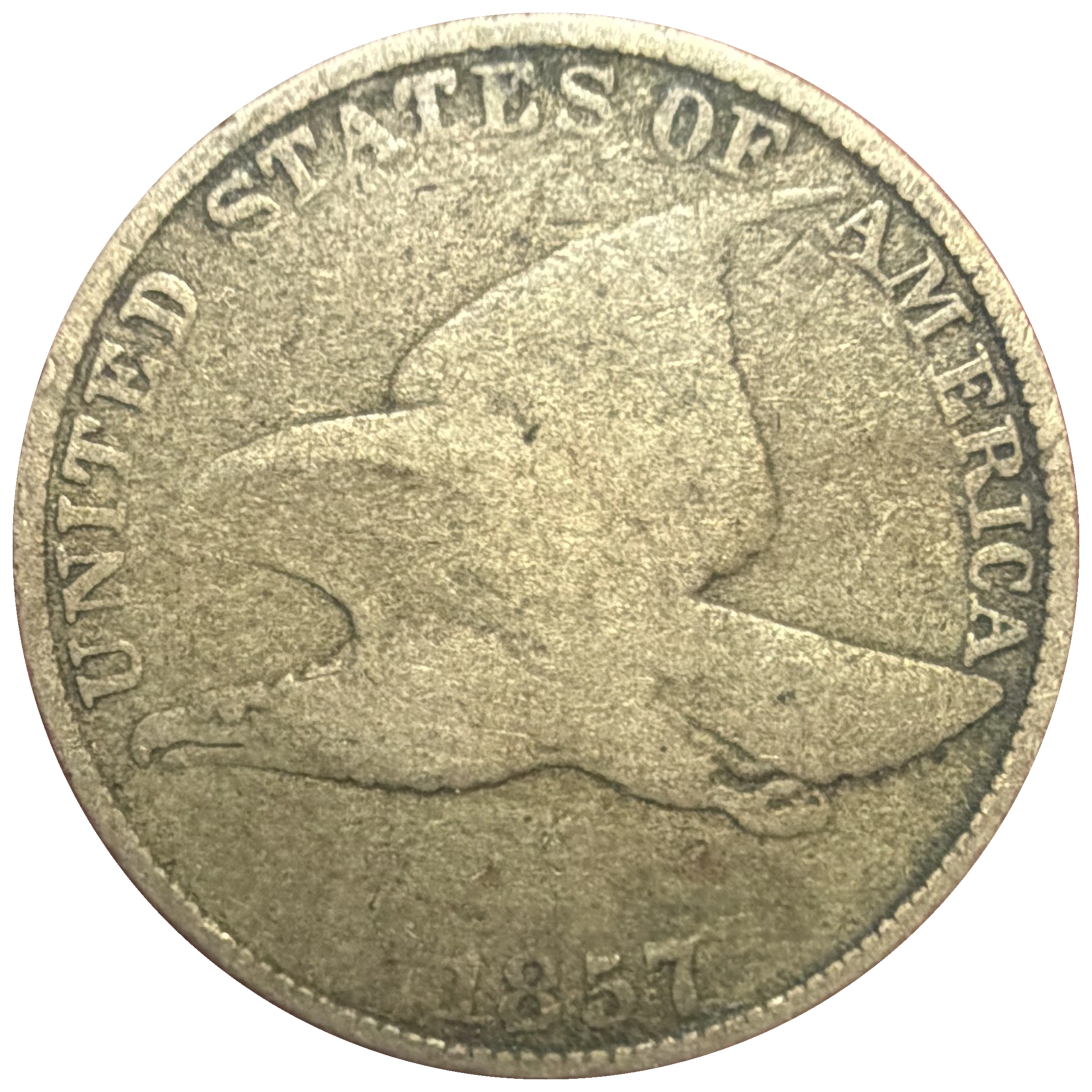
The 1857 Flying Eagle cent is the first small-format cent produced for general circulation in the United States. After sixty-four years of large copper cents, the American public received a coin that was radically different: smaller, lighter, and made from a copper-nickel alloy that gave it a pale, silvery appearance. The Coinage Act of February 21, 1857, had authorized the change, and the Mint began production immediately. Public reaction was enthusiastic. People lined up at the Philadelphia Mint to exchange old large cents and Spanish colonial coins for the new small cents at face value.
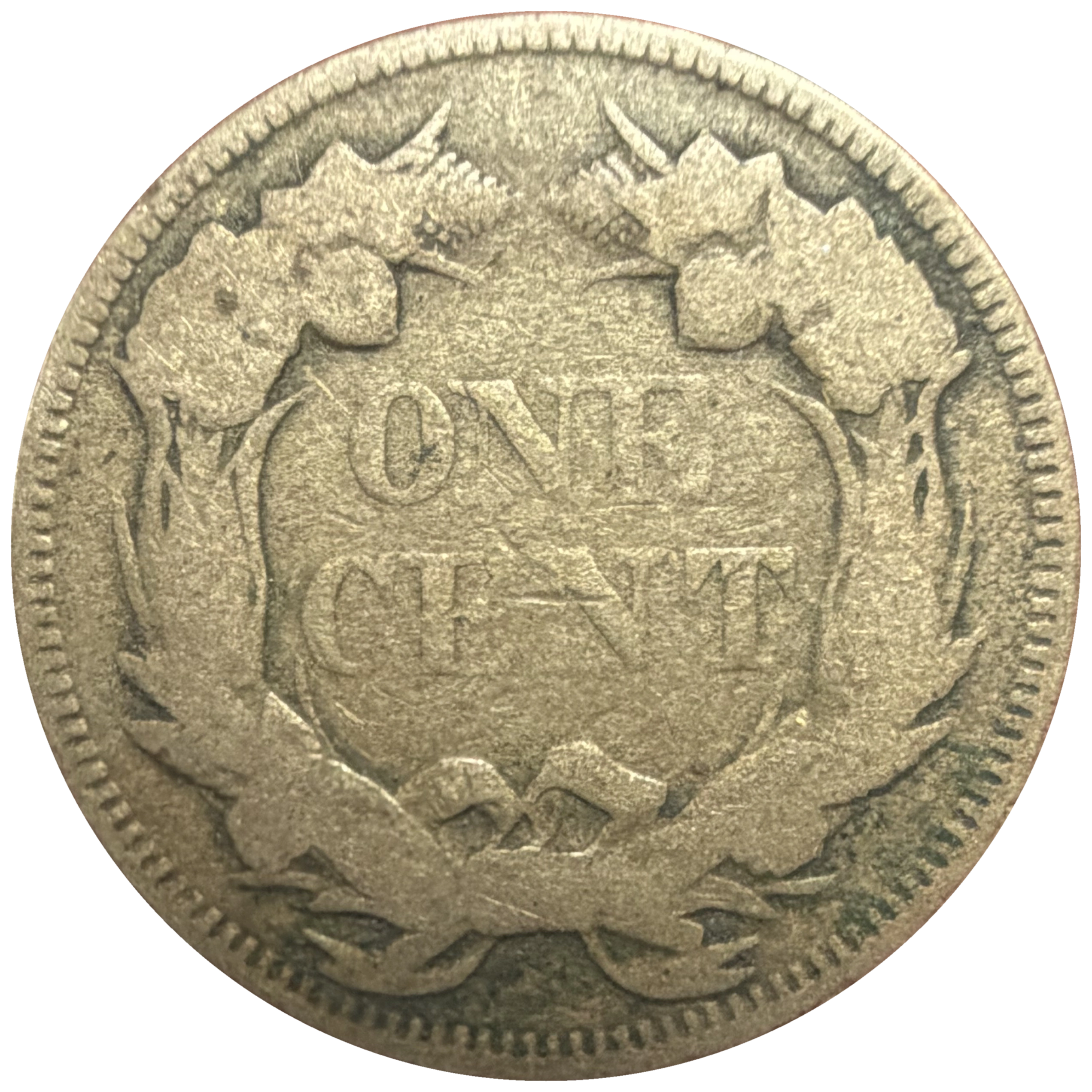
The mintage was enormous: over 17 million coins in the first year of production. The Mint was not just introducing a new design; it was replacing the entire stock of circulating cents in a country of 30 million people. Production ran at a pace the cent denomination had never seen. The design carried forward Longacre's flying eagle from the 1856 patterns, paired with the agricultural wreath reverse.
The 1857 Flying Eagle cent circulated heavily and is available in a wide range of grades. Good to Fine examples are plentiful. Very Fine and Extremely Fine coins are reasonably available for a type coin of this age. Uncirculated examples exist in sufficient numbers that a collector can be selective about strike quality and surface color. The copper-nickel alloy does not tone the way pure copper does; instead of brown or red-brown surfaces, Flying Eagle cents tend toward gray, gold, or pale tan.
Strike quality is a persistent issue with the Flying Eagle design. The eagle's tail feathers on the obverse align directly with the wreath on the reverse, creating opposing high points that the press struggled to fully impress simultaneously. Weakly struck examples are common, particularly in the eagle's breast feathers and the wreath details. A fully struck 1857 with sharp detail on both sides is scarcer than the mintage suggests and commands a premium over softly struck examples in the same grade.
Reference data only — not an appraisal.
| Grade | Description | Low | High |
|---|---|---|---|
| G-4 | Good (G) | $25 | $29 |
| VG-8 | Very Good (VG) | $36 | $42 |
| F-12 | Fine (F) | $45 | $52 |
| VF-20 | Very Fine (VF) | $53 | $61 |
| EF-40 | Extremely Fine (EF) | $115 | $133 |
| AU-50 | About Uncirculated (AU) | $172 | $199 |
| MS-60 | Uncirculated (MS) | $435 | $500 |
| MS-63 | Choice Uncirculated (MS) | $1,100 | $1,165 |
How much is a 1857 Flying Eagle Flying Eagle Cent worth?
How many 1857 Flying Eagle Flying Eagle Cents were minted?
What is a 1857 Flying Eagle Flying Eagle Cent made of?
What is the melt value of a 1857 Flying Eagle Flying Eagle Cent?
Is the 1857 Flying Eagle Flying Eagle Cent a key date?
Live listings from eBay. As an eBay Affiliate, Collector's Key may be compensated if you click a link and make a purchase. See all on eBay →
It is important that you educate yourself on a coin before making a substantial purchase, as some coins on eBay could be counterfeit or misrepresented. eBay Money Back Guarantee protects the buyer in these cases.