As an eBay Affiliate, Collector's Key may be compensated if you make a purchase through the link(s) above.
1851
| Weight | 0.8 g |
| Diameter | 14 mm |
| Mint | Philadelphia |
| Strike | Circulation strike |
| Mintage | 5,447,400 |
| Edge | Plain |
| Alignment | ↑↓ Coin |
| Composition | 75% Silver, 25% Copper |
| Melt value | — |
| Designer | James B. Longacre |
| Collector's Key ID | CK-874 |
Collection
Your collection
Sign in to track this coin.
One tap — add details later from your collection list.
No additional varieties recorded for this strike.
External references
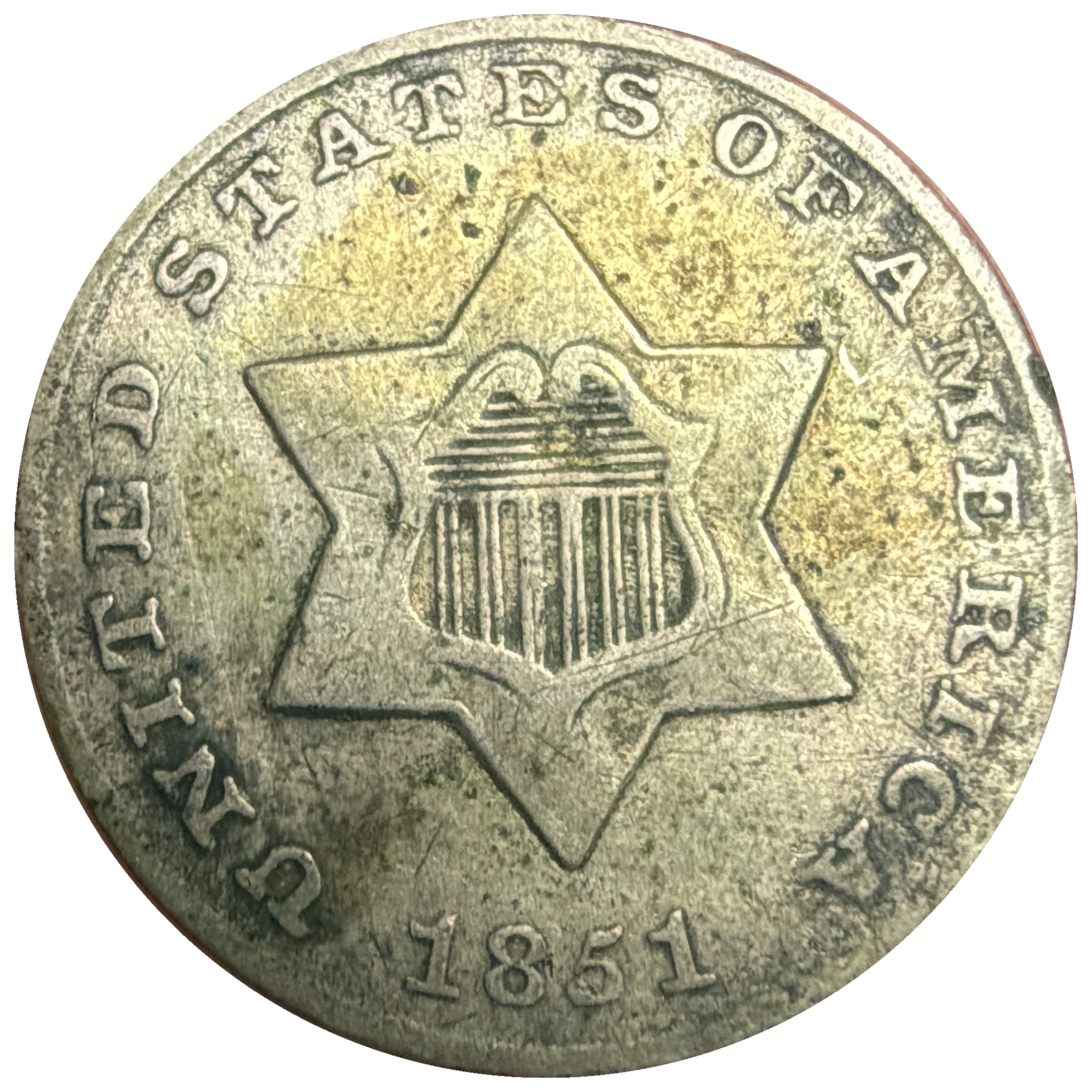
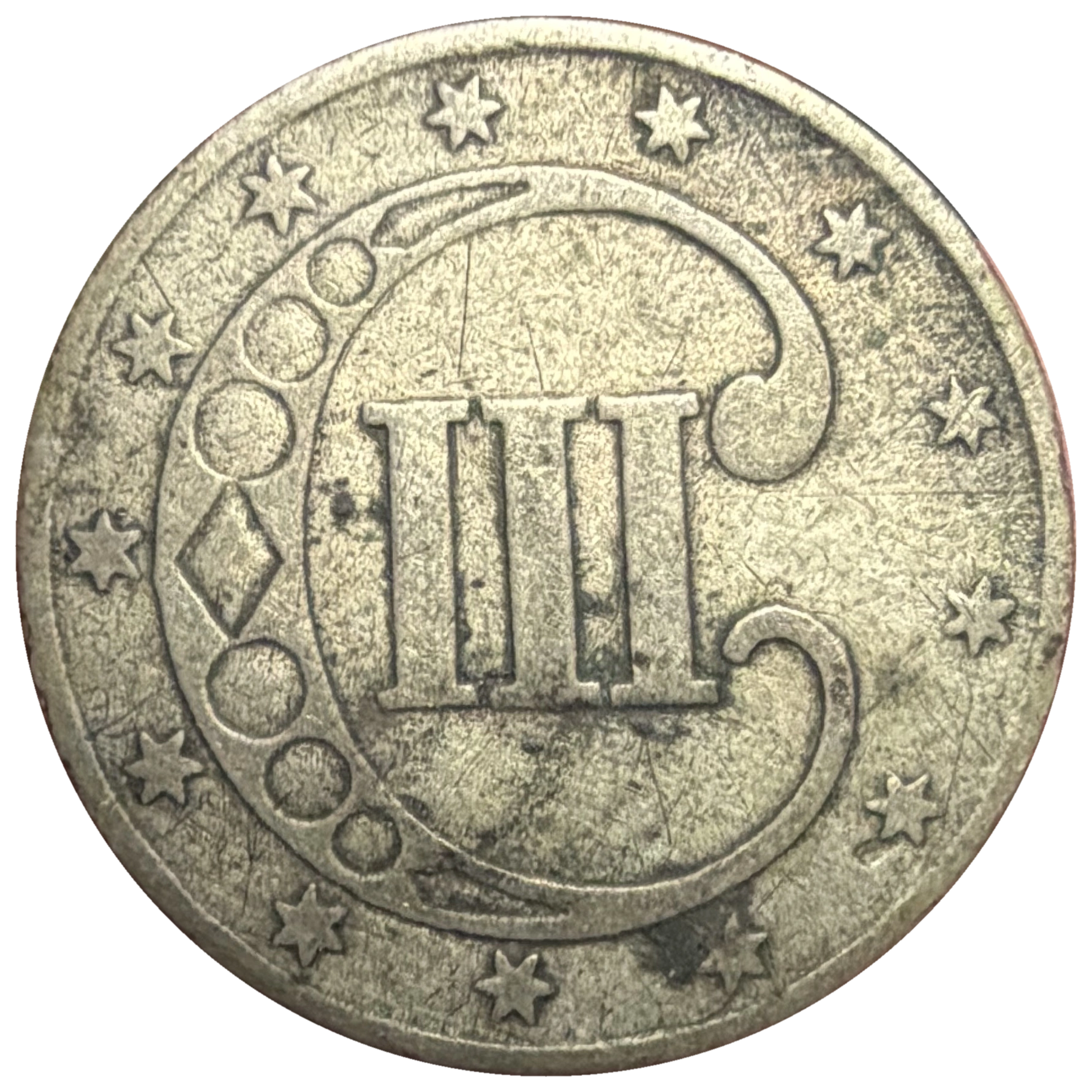
The 1851 three-cent silver is the first year of the smallest coin ever produced by the United States Mint. At 14 millimeters in diameter and 0.80 grams in weight, the three-cent silver is tiny even by nineteenth-century standards. The obverse carries a simple six-pointed star with the federal shield at its center, designed by James B. Longacre. The reverse shows the Roman numeral III inside an ornamental "C" for cents. Nicknamed the "trime" or "fish-scale," the coin was born out of a specific legislative need: the creation of a three-cent postage stamp.
The Act of March 3, 1851, signed by President Millard Fillmore, authorized both the reduction of postage from five cents to three cents and the creation of a three-cent coin to make stamp purchases convenient. Senator Daniel Stevens Dickinson of New York fathered the legislation. Copper cents were not legal tender and not accepted for postage, and private "shinplaster" notes were refused at post offices. The government needed a coin that fit the new stamp rate exactly. The Mint answered with one purpose-built for the job.
The 1851 trime is unique among American silver coins for its composition. Instead of the standard 90% silver, the Type I coins were struck in 75% silver and 25% copper. The reduced silver content was deliberate: Mint Director Patterson calculated that at .750 fineness, the coin contained only 2.5 cents of silver, meaning the Mint could profit through seignorage while also removing any hoarding incentive. Patterson's memo to Treasury Secretary Corwin spelled it out explicitly: a full-silver trime would be melted or exported; a debased trime would circulate. The compromise worked. Trimes entered commerce and stayed there, serving their postage-stamp purpose and functioning as small change.
The 1851 mintage was approximately 5.45 million coins at Philadelphia. The coin circulated widely and survived in sufficient numbers that it remains one of the more available early trimes. Good to Fine examples are common by the standards of the series, though the tiny size means the coins are easily overlooked in casual examination. A collector looking for the first year of the smallest US coin will find the 1851 the most accessible point of entry.
Reference data only — not an appraisal.
| Grade | Description | Low | High |
|---|---|---|---|
| G-4 | Good (G) | $35 | $41 |
| VG-8 | Very Good (VG) | $40 | $47 |
| F-12 | Fine (F) | $48 | $56 |
| VF-20 | Very Fine (VF) | $61 | $70 |
| EF-40 | Extremely Fine (EF) | $81 | $93 |
| AU-50 | About Uncirculated (AU) | $135 | $156 |
| MS-60 | Uncirculated (MS) | $189 | $220 |
| MS-63 | Choice Uncirculated (MS) | $345 | $365 |
How much is a 1851 Three-Cent Silver (Trimes) worth?
How many 1851 Three-Cent Silvers (Trimes) were minted?
What is a 1851 Three-Cent Silver (Trimes) made of?
What is the melt value of a 1851 Three-Cent Silver (Trimes)?
Is the 1851 Three-Cent Silver (Trimes) a key date?
Live listings from eBay. As an eBay Affiliate, Collector's Key may be compensated if you click a link and make a purchase. See all on eBay →
It is important that you educate yourself on a coin before making a substantial purchase, as some coins on eBay could be counterfeit or misrepresented. eBay Money Back Guarantee protects the buyer in these cases.