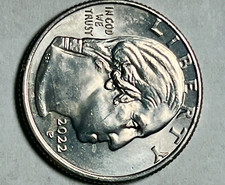
2022-P Sally Ride Washington Quarter (American Women)
| Weight | 5.67 grams |
| Diameter | 24.3 mm |
| Mint | P |
| Mintage | 275,200,000 |
| Edge | Reeded |
| Alignment | ↑↓ Coin |
| Composition | Copper-Nickel Clad (75% Cu, 25% Ni bonded to pure Cu core) |
| Designer | Laura Gardin Fraser (obverse) |
| Collector's Key ID | CK-3571 |
Sally Ride (1951-2012) made history on June 18, 1983, when she launched aboard the Space Shuttle Challenger and became the first American woman in space. A physicist by training, Ride was selected by NASA in 1978 as part of the first astronaut class to include women. She flew a second shuttle mission in 1984 and later served on the presidential commissions investigating both the Challenger and Columbia disasters. After leaving NASA, Ride became a physics professor at the University of California, San Diego, and founded Sally Ride Science to inspire young women and girls to pursue careers in STEM fields.
The reverse, designed by Elana Hagler and sculpted by Phebe Hemphill, shows Ride next to a window of the space shuttle with a glimpse of Earth visible beyond. The composition evokes the singular moment when Ride looked back at the planet from orbit. Philadelphia delivered 275,200,000 Sally Ride quarters, the second design released in the 2022 American Women series.
About Sally Ride
Sally Kristen Ride was born May 26, 1951, in Los Angeles to Dale and Carol Ride. She showed early aptitude in both athletics and academics, ranking among the top junior tennis players in Southern California before enrolling at Westlake School for Girls on a partial scholarship. At Stanford University she earned dual bachelor's degrees in physics and English, then completed a master's and a doctorate in physics, with her dissertation examining the interaction of X-rays with the interstellar medium. She discovered NASA's call for astronaut candidates through an advertisement in the Stanford Daily in January 1977 and was chosen from over 8,000 applicants. Before her own flight, she served as capsule communicator for the second and third shuttle missions and helped develop the shuttle's robotic arm system. During STS-7, she deployed two communications satellites using that arm. She was training for a third spaceflight when the Challenger explosion in January 1986 changed the course of her career. Her partnership of twenty-seven years with Tam O'Shaughnessy became public only after her death from pancreatic cancer on July 23, 2012. She received a posthumous Presidential Medal of Freedom in 2013.
| Grade | Description | Typical Price |
|---|---|---|
| G-4 | Good (G) | — |
| VG-8 | Very Good (VG) | — |
| F-12 | Fine (F) | — |
| VF-20 | Very Fine (VF) | — |
| EF-40 | Extremely Fine (EF) | — |
| AU-50 | About Uncirculated (AU) | — |
| MS-60 | Uncirculated (MS) | $0.40–$0.45 |
| MS-63 | Choice Uncirculated (MS) | — |
This table is for educational purposes only and is intended to illustrate general market price trends and pricing steps between grades. Actual market conditions may vary significantly, especially for rarer pieces that often command premiums above the ranges shown here.




Listings refreshed hourly from eBay. When you interact with these links, Collector's Key may earn a commission through the eBay Partner Network.