As an eBay Affiliate, Collector's Key may be compensated if you make a purchase through the link(s) above.
1910
| Weight | 4.18 g |
| Diameter | 18 mm |
| Mint | Philadelphia |
| Strike | Circulation strike |
| Mintage | 492,682 |
| Edge | Reeded |
| Alignment | ↑↓ Coin |
| Composition | 90% Gold, 10% Copper |
| Melt value | — |
| Designer | Bela Lyon Pratt |
| Collector's Key ID | CK-5596 |
Collection
Your collection
Sign in to track this coin.
One tap — add details later from your collection list.
No additional varieties recorded for this strike.
External references
Last edited: March 22, 2026
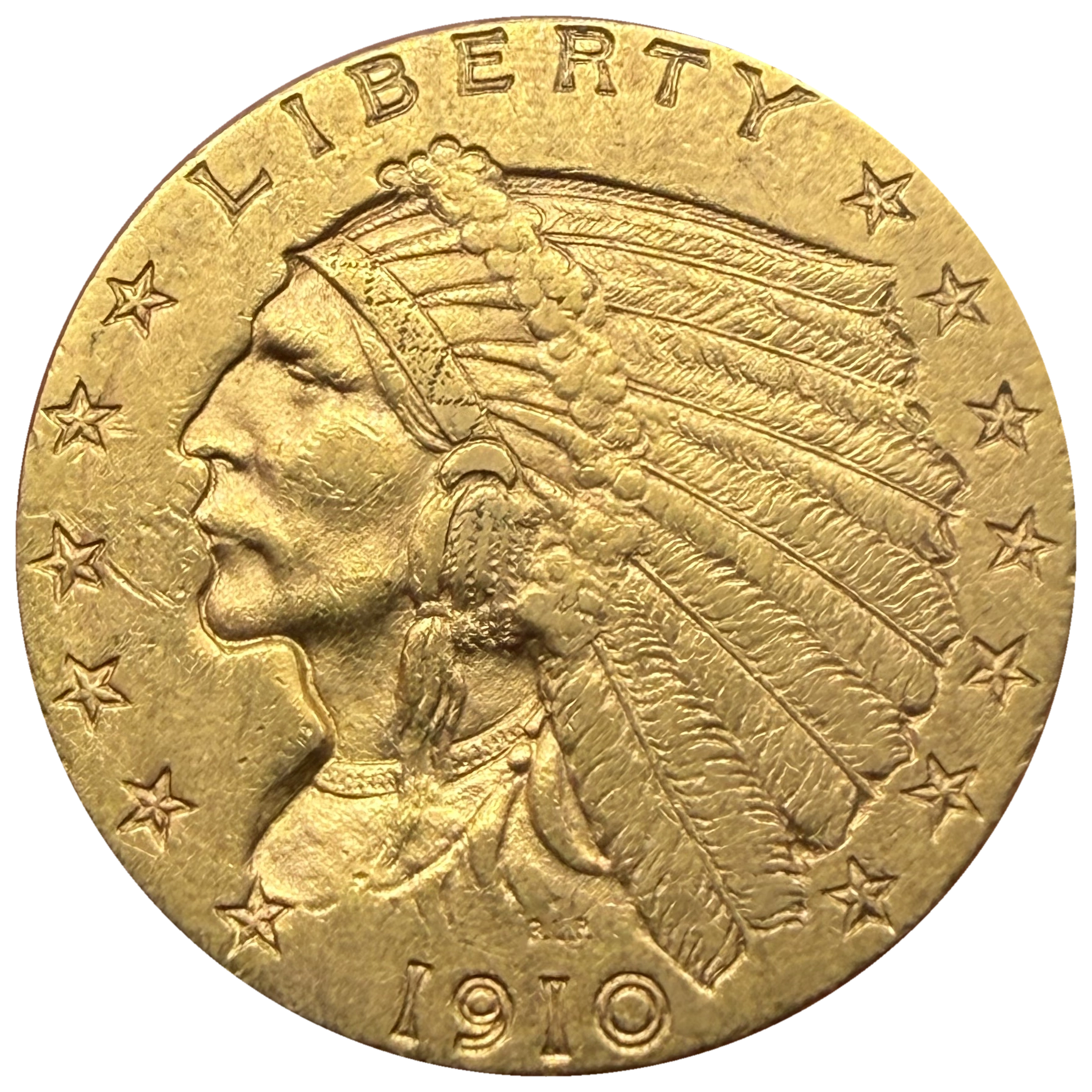
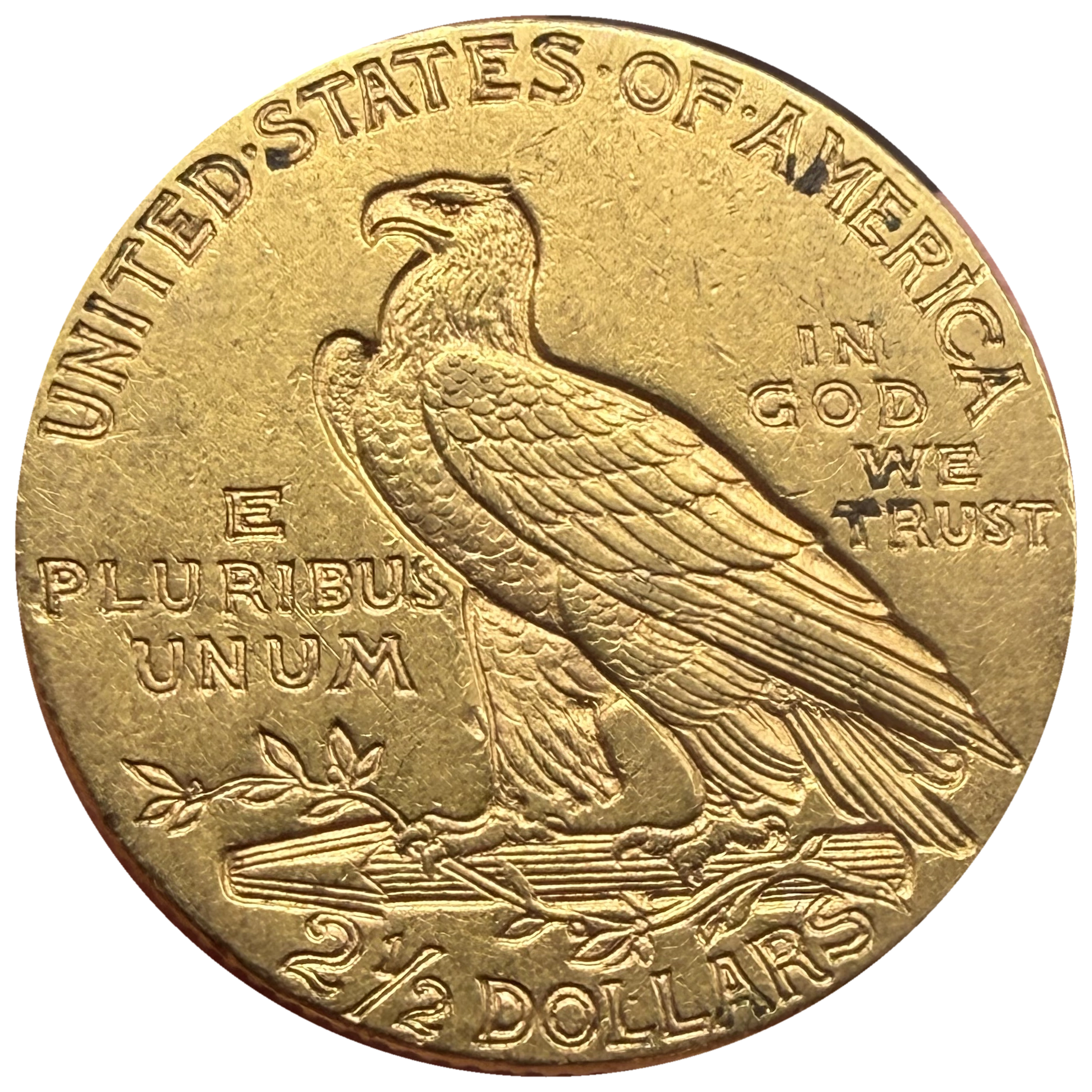
By 1910 the Indian Head Quarter Eagle was no longer a novelty. Bela Lyon Pratt's incused design had landed in 1908 to mixed reviews, with the railroad financier William E. Comstock leading a public objection that recessed devices would harbor dirt and disease, and the trade had spent two years adjusting to the look of a coin whose high points were its field. The 492,682 pieces struck at Philadelphia that year fed routine commerce in a busy economic moment, and most slid into circulation without ceremony. Halley's Comet swept overhead in May of that spring, a once-in-a-lifetime sight that bracketed the year for Americans even as the Mint kept turning out small gold for daily use, with the quarter eagle being the workhorse denomination for tipping, gifts, and modest balance settlements.
Authentication on a 1910 starts with the basics. Weight should sit very close to 4.18 grams, and any meaningful loss points to wear, polishing, or a poorly executed counterfeit. Pratt's incused format means the design integrity check runs in reverse of the usual habit. Look for crisp, deeply recessed feather work in the headdress and the eagle's plumage, with sharp interior lines that a struck piece holds even after handling. Cast counterfeits, the most common threat on this denomination, give themselves away through a granular surface in the recessed areas, soft or rounded interior detail, and seam evidence on the reeded edge. The fields between the devices, which carry the wear on a Pratt coin, should show consistent luster and texture rather than the muted, slightly pebbly look of a transferred copy.
Most 1910s available today are circulated examples in the VF to AU range, where the date trades as a representative type coin rather than a condition rarity. Mint state survivors are reasonably plentiful through the lower grades thanks to the size of the original mintage and a steady flow of returns from European bank holdings over the twentieth century. Genuine scarcity begins above MS-64, and gem material thins quickly from there. For most collectors, a problem-free EF or choice AU offers the best balance of price and eye appeal, with the recessed design rewarding close inspection more than slab grade alone. See the full Indian Head Quarter Eagle series history.
Reference data only — not an appraisal.
| Grade | Description | Low | High |
|---|---|---|---|
| G-4 | Good (G) | — | — |
| VG-8 | Very Good (VG) | — | — |
| F-12 | Fine (F) | — | — |
| VF-20 | Very Fine (VF) | $575 | $665 |
| EF-40 | Extremely Fine (EF) | $595 | $685 |
| AU-50 | About Uncirculated (AU) | $615 | $705 |
| MS-60 | Uncirculated (MS) | $630 | $730 |
| MS-63 | Choice Uncirculated (MS) | $1,680 | $1,780 |
How much is a 1910 Indian Head Gold $2.5 Quarter Eagle worth?
How many 1910 Indian Head Gold $2.5 Quarter Eagles were minted?
What is a 1910 Indian Head Gold $2.5 Quarter Eagle made of?
What is the melt value of a 1910 Indian Head Gold $2.5 Quarter Eagle?
Is the 1910 Indian Head Gold $2.5 Quarter Eagle a key date?
Live listings from eBay. As an eBay Affiliate, Collector's Key may be compensated if you click a link and make a purchase. See all on eBay →
It is important that you educate yourself on a coin before making a substantial purchase, as some coins on eBay could be counterfeit or misrepresented. eBay Money Back Guarantee protects the buyer in these cases.