As an eBay Affiliate, Collector's Key may be compensated if you make a purchase through the link(s) above.
1911
| Weight | 4.18 g |
| Diameter | 18 mm |
| Mint | Philadelphia |
| Strike | Circulation strike |
| Mintage | 704,191 |
| Edge | Reeded |
| Alignment | ↑↓ Coin |
| Composition | 90% Gold, 10% Copper |
| Melt value | — |
| Designer | Bela Lyon Pratt |
| Collector's Key ID | CK-5598 |
Collection
Your collection
Sign in to track this coin.
One tap — add details later from your collection list.
No additional varieties recorded for this strike.
External references
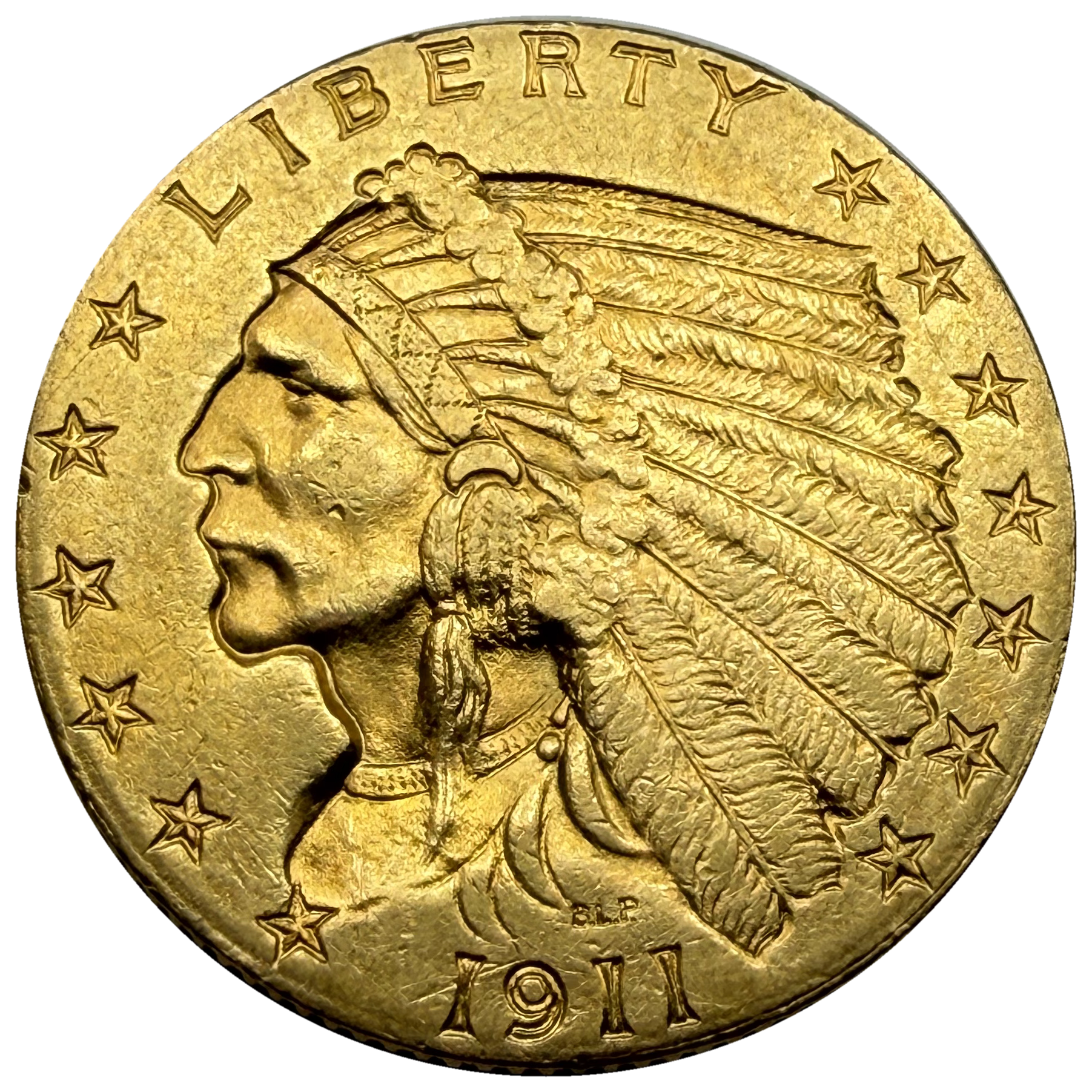
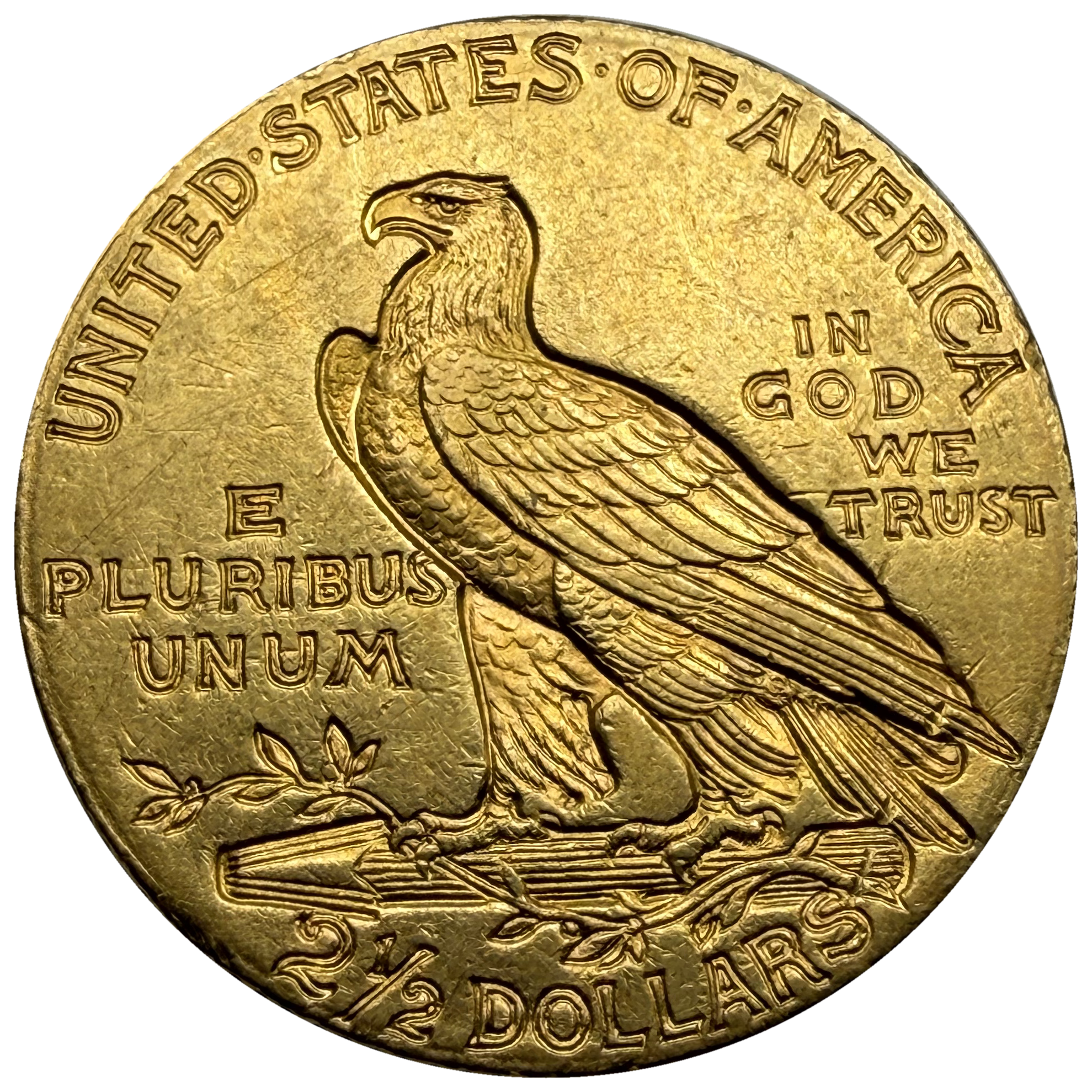
Bela Lyon Pratt's incused quarter eagle reached its production peak in 1911, when 704,191 pieces left Philadelphia. That figure ranks as the highest single-year output for the type up to that point in the series and reflects the brisk gold-coin demand that characterized commerce in the years before the First World War. The companion 1911-D from Denver tells the opposite story, with a tiny 55,680-piece run that turned that issue into the famous series key, but the Philadelphia date is where availability and affordability meet for type collectors. Pratt's design, with sunken devices and recessed legends rather than coinage relief, was still drawing public commentary three years after its 1908 debut, and the 1911 marks the design at full maturity in a year of confident, high-volume production.
Authentication of a Pratt quarter eagle starts with the planchet itself. A genuine 1911 weighs 4.18 grams in 90% gold and 10% copper alloy, struck on an 18 mm planchet with a reeded edge, and meaningful deviation from that mass is the first warning sign on any suspect piece. Because the design is incused, counterfeit detection differs from work on a relief coin. The recessed feathers on the headdress, the sharp edges around the date, and the crisp interior detail of the eagle's plumage on the reverse should all show clean, knife-edged transitions where the metal was driven into the die. Cast counterfeits typically show softened, mushy boundaries inside those incused areas along with seams or porosity at the rim, while pressure-struck fakes often betray themselves through incorrect weight or fields that lack the satiny texture of an original Mint product.
For modern collectors, the 1911 Philadelphia is the practical entry point to the series and the natural choice for a representative piece in a U.S. gold type set. Circulated examples in VF and XF are abundant and trade at modest premiums over gold value, and choice About Uncirculated coins remain readily available at any major show or online auction. The mint state market thins as grades climb into MS63 and above, where original luster, clean cheeks on the Native American portrait, and undisturbed fields begin to command real premiums, and gem MS65 examples are scarce enough to reward careful shopping. See the full Indian Head Quarter Eagle series history.
Reference data only — not an appraisal.
| Grade | Description | Low | High |
|---|---|---|---|
| G-4 | Good (G) | — | — |
| VG-8 | Very Good (VG) | — | — |
| F-12 | Fine (F) | — | — |
| VF-20 | Very Fine (VF) | $575 | $665 |
| EF-40 | Extremely Fine (EF) | $595 | $685 |
| AU-50 | About Uncirculated (AU) | $615 | $705 |
| MS-60 | Uncirculated (MS) | $630 | $730 |
| MS-63 | Choice Uncirculated (MS) | $1,315 | $1,390 |
How much is a 1911 Indian Head Gold $2.5 Quarter Eagle worth?
How many 1911 Indian Head Gold $2.5 Quarter Eagles were minted?
What is a 1911 Indian Head Gold $2.5 Quarter Eagle made of?
What is the melt value of a 1911 Indian Head Gold $2.5 Quarter Eagle?
Is the 1911 Indian Head Gold $2.5 Quarter Eagle a key date?
Live listings from eBay. As an eBay Affiliate, Collector's Key may be compensated if you click a link and make a purchase. See all on eBay →
It is important that you educate yourself on a coin before making a substantial purchase, as some coins on eBay could be counterfeit or misrepresented. eBay Money Back Guarantee protects the buyer in these cases.