As an eBay Affiliate, Collector's Key may be compensated if you make a purchase through the link(s) above.
1912
| Weight | 4.18 g |
| Diameter | 18 mm |
| Mint | Philadelphia |
| Strike | Circulation strike |
| Mintage | 616,197 |
| Edge | Reeded |
| Alignment | ↑↓ Coin |
| Composition | 90% Gold, 10% Copper |
| Melt value | — |
| Designer | Bela Lyon Pratt |
| Collector's Key ID | CK-5601 |
Collection
Your collection
Sign in to track this coin.
One tap — add details later from your collection list.
No additional varieties recorded for this strike.
External references
Last edited: March 18, 2026
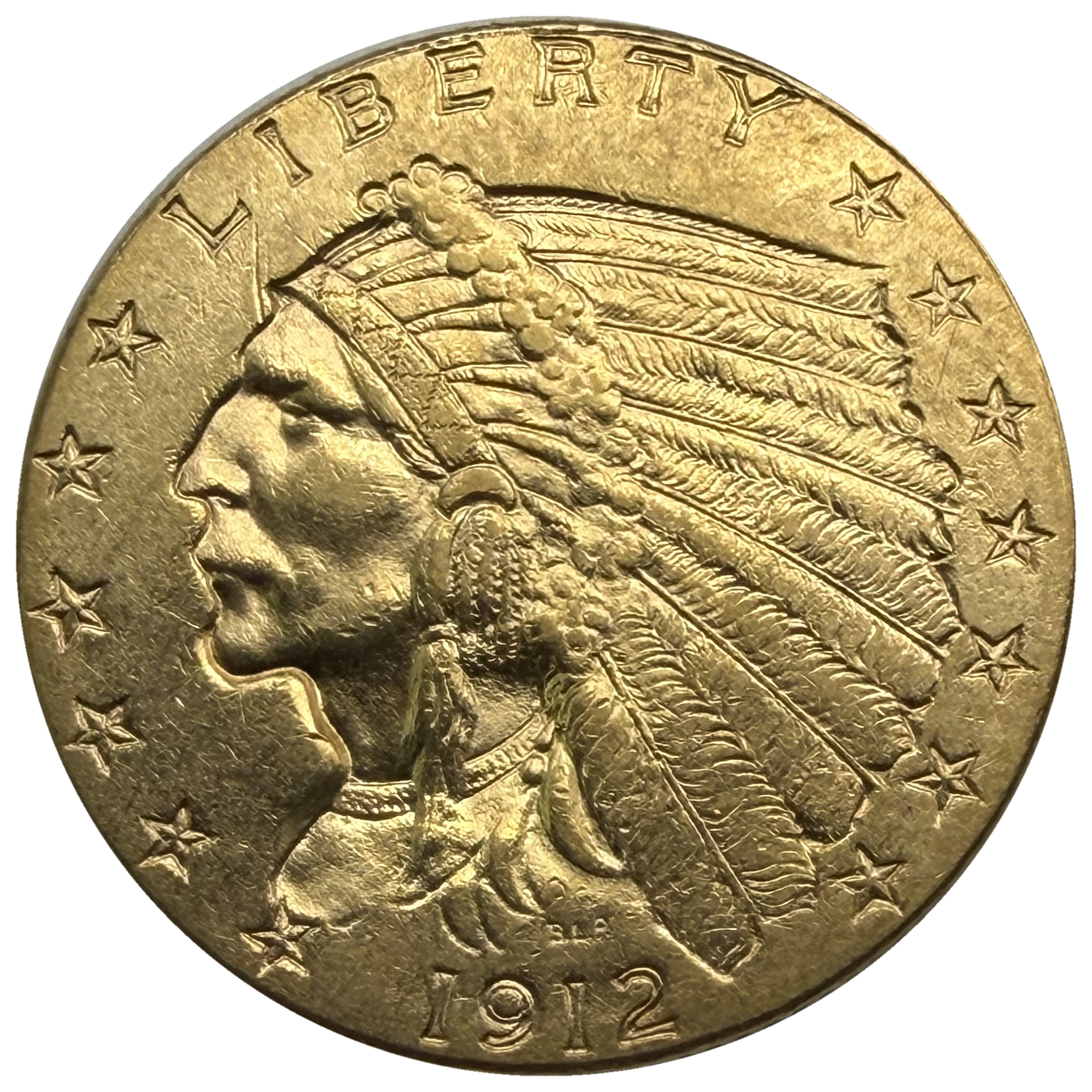
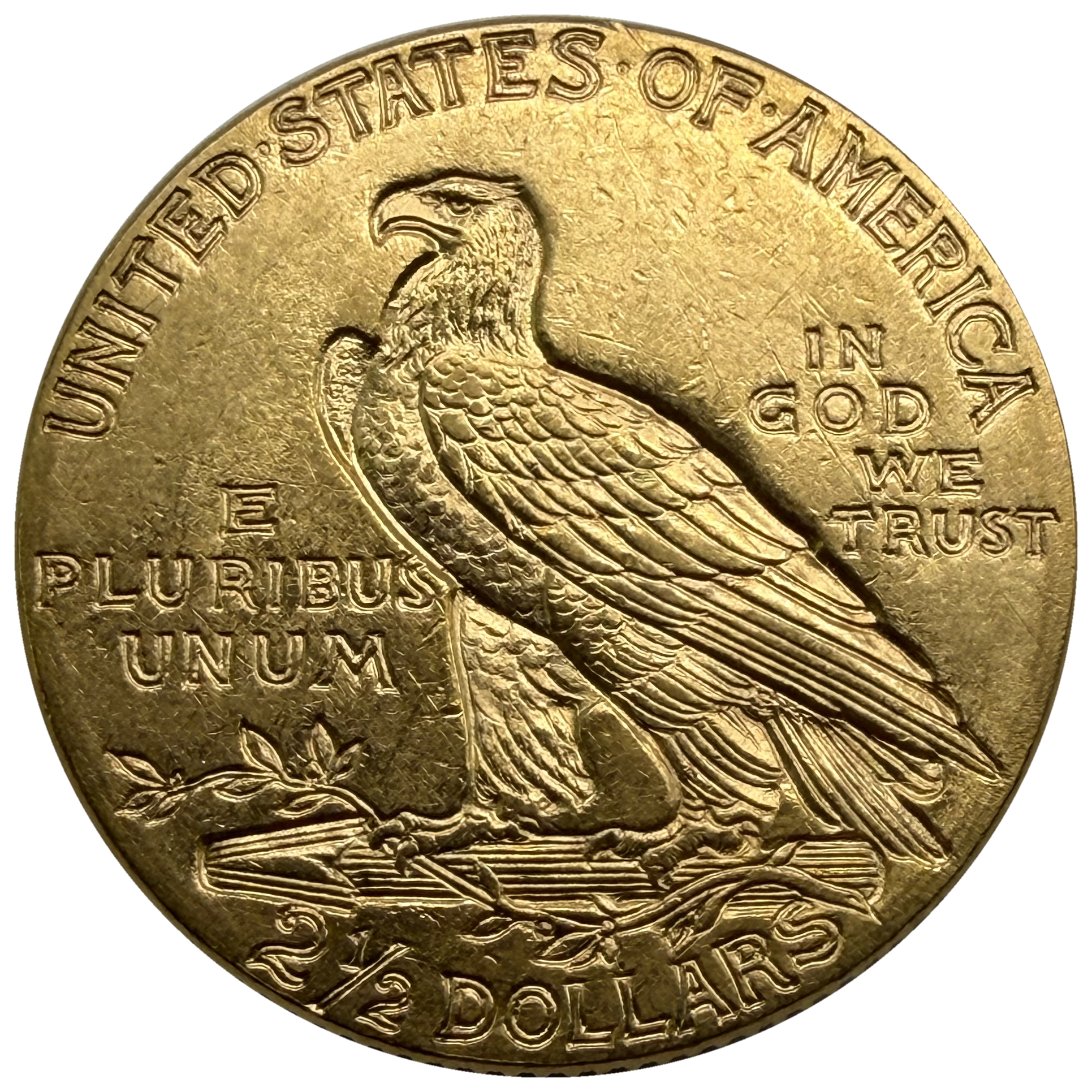
The 1912 Quarter Eagle landed in the middle of one of the most turbulent presidential election cycles in American history, with William Howard Taft, Woodrow Wilson, and Theodore Roosevelt's Bull Moose insurgency splitting the vote in three directions. Philadelphia's run of 616,197 pieces reflected the steady gold demand of a country still riding the prosperity that had defined Roosevelt's earlier years and would soon end with the world war. Bela Lyon Pratt's incused design had now been in circulation for four years, and the early uproar over recessed devices supposedly harboring germs had quieted as banks, jewelers, and ordinary commercial users grew accustomed to handling the unconventional sculpting. The denomination itself was already drifting toward obsolescence in everyday transactions, but the small gold coin retained a ceremonial role for gifts, gambling tokens, and minor settlements where a folded bill felt insufficient.
Authenticators evaluating a 1912 Quarter Eagle should begin with the weight standard of 4.18 grams, since shaved or cast counterfeits regularly miss this figure by a tenth of a gram or more. The incused design demands focused attention: the recessed lines defining the headdress feathers, the eagle's plumage, and the lettering should display sharp vertical walls within the planchet rather than the rounded, mushy edges that betray transfer-die fakes. Cast counterfeit detection relies on examining the field surfaces under magnification for the granular texture or microscopic porosity that distinguishes a poured fake from a struck coin, since the recessed devices on Pratt's design make casts particularly difficult to disguise. Verify medal alignment by rotating the piece top to bottom and confirming both sides remain upright, then count the reeds and inspect the rim for the file marks or seam evidence that often accompanies modified or counterfeit specimens.
For modern collectors, the 1912 Quarter Eagle ranks among the more accessible Pratt-era issues, with circulated examples available at modest premiums over melt and Mint State pieces obtainable across most grade tiers without significant difficulty. Gem-quality survivors carry meaningful premiums, however, because the smooth incused fields read every contact mark prominently and original luster is harder to preserve than on raised-design coinage. See the full Indian Head Quarter Eagle series history.
Reference data only — not an appraisal.
| Grade | Description | Low | High |
|---|---|---|---|
| G-4 | Good (G) | — | — |
| VG-8 | Very Good (VG) | — | — |
| F-12 | Fine (F) | — | — |
| VF-20 | Very Fine (VF) | $575 | $665 |
| EF-40 | Extremely Fine (EF) | $595 | $685 |
| AU-50 | About Uncirculated (AU) | $615 | $705 |
| MS-60 | Uncirculated (MS) | $630 | $730 |
| MS-63 | Choice Uncirculated (MS) | $2,105 | $2,230 |
How much is a 1912 Indian Head Gold $2.5 Quarter Eagle worth?
How many 1912 Indian Head Gold $2.5 Quarter Eagles were minted?
What is a 1912 Indian Head Gold $2.5 Quarter Eagle made of?
What is the melt value of a 1912 Indian Head Gold $2.5 Quarter Eagle?
Is the 1912 Indian Head Gold $2.5 Quarter Eagle a key date?
Live listings from eBay. As an eBay Affiliate, Collector's Key may be compensated if you click a link and make a purchase. See all on eBay →
It is important that you educate yourself on a coin before making a substantial purchase, as some coins on eBay could be counterfeit or misrepresented. eBay Money Back Guarantee protects the buyer in these cases.