As an eBay Affiliate, Collector's Key may be compensated if you make a purchase through the link(s) above.
1913
| Weight | 4.18 g |
| Diameter | 18 mm |
| Mint | Philadelphia |
| Strike | Circulation strike |
| Mintage | 722,165 |
| Edge | Reeded |
| Alignment | ↑↓ Coin |
| Composition | 90% Gold, 10% Copper |
| Melt value | — |
| Designer | Bela Lyon Pratt |
| Collector's Key ID | CK-5603 |
Collection
Your collection
Sign in to track this coin.
One tap — add details later from your collection list.
No additional varieties recorded for this strike.
External references
Last edited: March 18, 2026
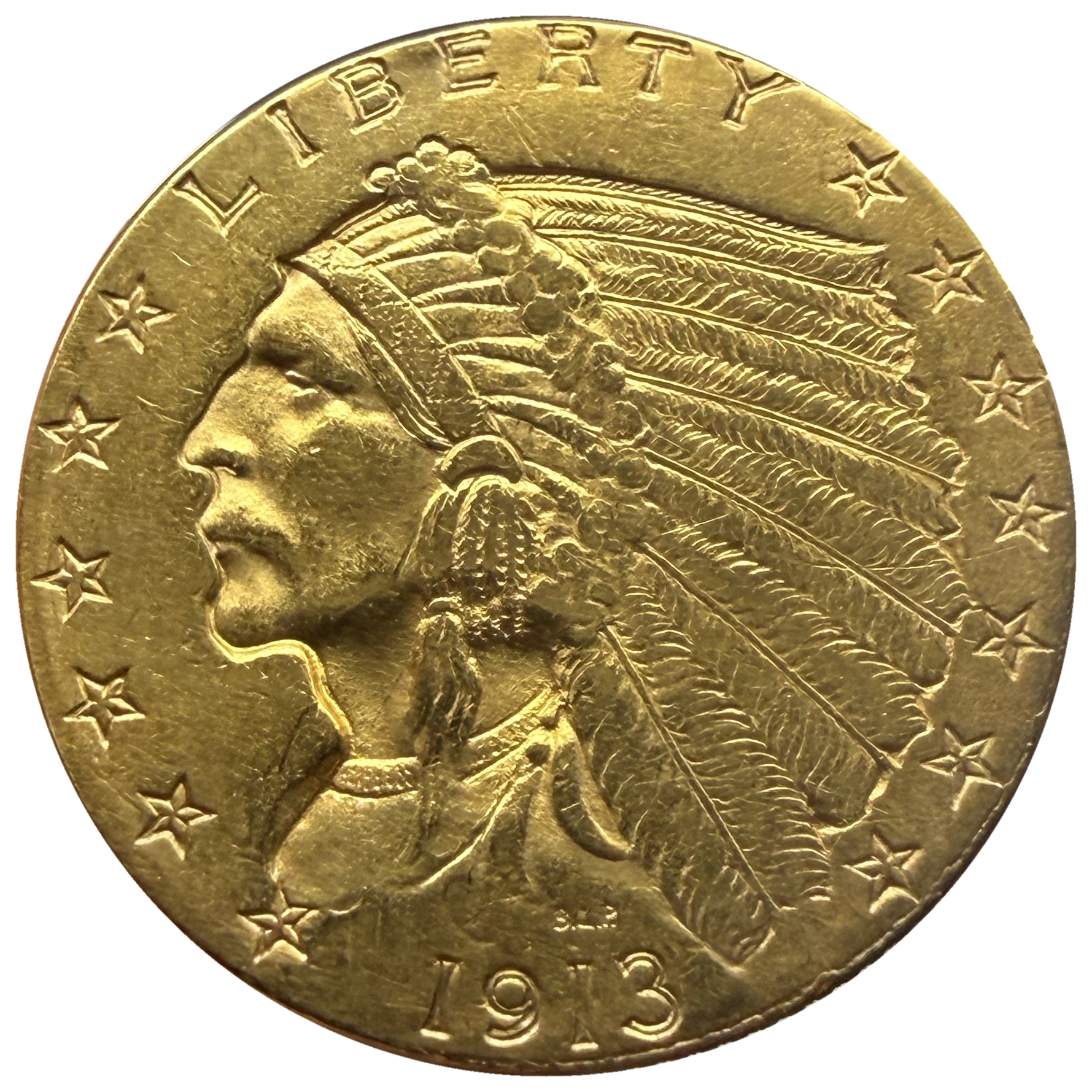
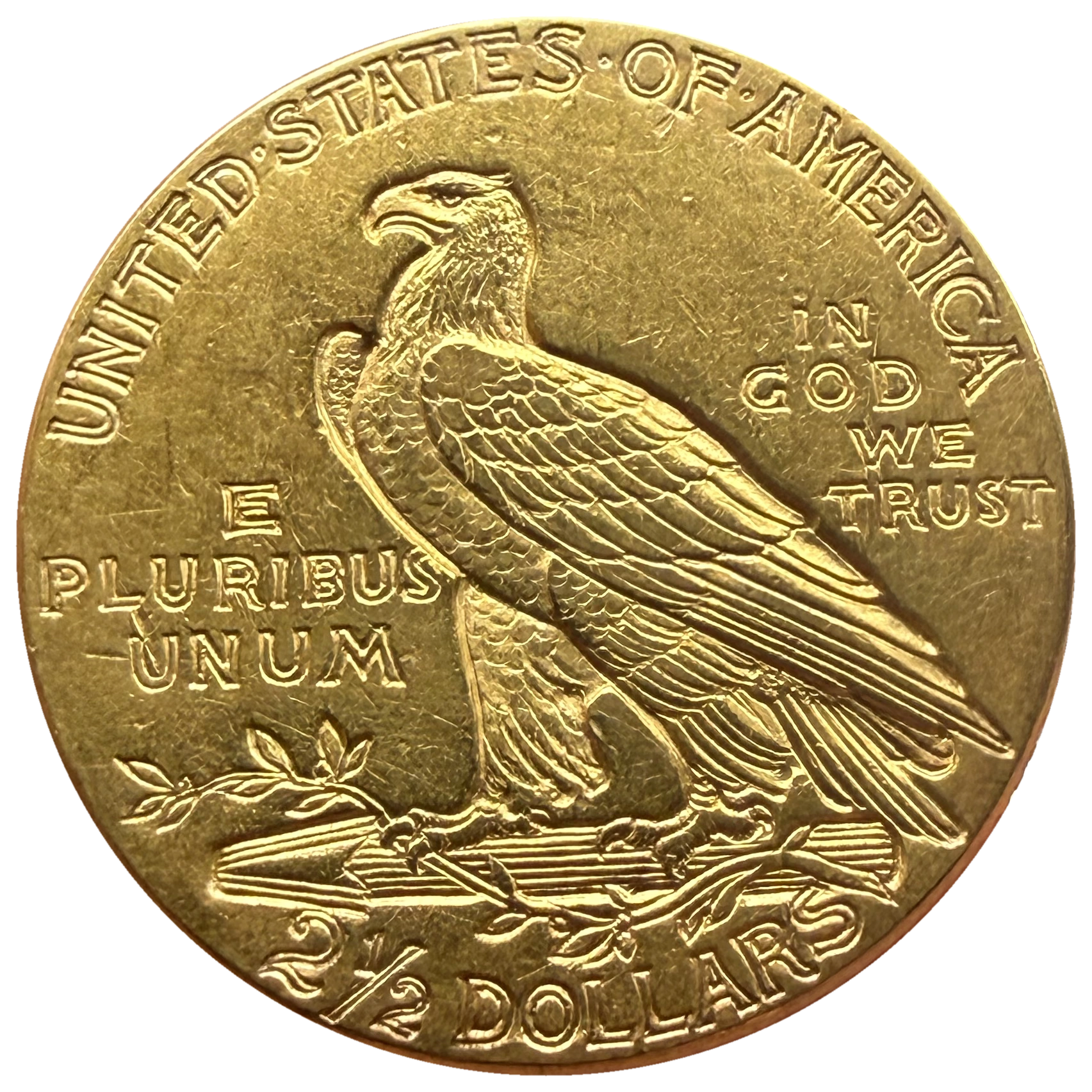
Philadelphia struck 722,165 Quarter Eagles in 1913, the highest single-year mintage of the entire Indian Head series and a figure that would not be approached again before the design ran its course. The output reflected an American economy entering its final stretch of pre-war stability: the Federal Reserve Act would be signed into law that December, fundamentally restructuring American banking and currency policy, while in Europe the diplomatic web that would collapse in August 1914 was already being woven. Small gold pieces still circulated freely in 1913, used by merchants and travelers who valued their portability over the bulkier double eagles, and Bela Lyon Pratt's incused design, controversial at its 1908 debut, had by now settled into quiet acceptance among the working public who handled the coins daily.
Authenticators evaluating a 1913 Quarter Eagle should anchor verification on the 4.18 gram weight standard, since cast counterfeits and shaved examples typically miss this figure by measurable margins. Pratt's incused design provides the most distinctive diagnostic territory: the recessed feathers of the headdress, the eagle's incised plumage, and the sunken letters of the inscriptions should display sharp vertical walls within the planchet, not the rounded or fuzzy edges that betray transfer-die or struck counterfeits. Cast fakes often show telltale mold seams along the reeded edge, granular surfaces in the recessed fields, and lifeless luster that fails to flow naturally across the smooth raised portions of the field. Magnification of the inscriptions and the eagle's feather detail will quickly separate genuine Mint work from imitative production.
For modern collectors, the 1913 ranks among the most readily available dates in the Indian Head Quarter Eagle series, with circulated examples trading at modest premiums over their gold content and Mint State pieces obtainable across a wide grade range. The high mintage means assembling a problem-free example requires patience rather than budget, and the date is often selected as a representative type coin for collectors building broader US gold sets. Premium-grade survivors carry meaningful jumps owing to the design's tendency to display contact marks prominently against the smooth field. See the full Indian Head Quarter Eagle series history.
Reference data only — not an appraisal.
| Grade | Description | Low | High |
|---|---|---|---|
| G-4 | Good (G) | — | — |
| VG-8 | Very Good (VG) | — | — |
| F-12 | Fine (F) | — | — |
| VF-20 | Very Fine (VF) | $575 | $665 |
| EF-40 | Extremely Fine (EF) | $595 | $685 |
| AU-50 | About Uncirculated (AU) | $615 | $705 |
| MS-60 | Uncirculated (MS) | $630 | $730 |
| MS-63 | Choice Uncirculated (MS) | $1,315 | $1,390 |
How much is a 1913 Indian Head Gold $2.5 Quarter Eagle worth?
How many 1913 Indian Head Gold $2.5 Quarter Eagles were minted?
What is a 1913 Indian Head Gold $2.5 Quarter Eagle made of?
What is the melt value of a 1913 Indian Head Gold $2.5 Quarter Eagle?
Is the 1913 Indian Head Gold $2.5 Quarter Eagle a key date?
Live listings from eBay. As an eBay Affiliate, Collector's Key may be compensated if you click a link and make a purchase. See all on eBay →
It is important that you educate yourself on a coin before making a substantial purchase, as some coins on eBay could be counterfeit or misrepresented. eBay Money Back Guarantee protects the buyer in these cases.