As an eBay Affiliate, Collector's Key may be compensated if you make a purchase through the link(s) above.
1915
| Weight | 4.18 g |
| Diameter | 18 mm |
| Mint | Philadelphia |
| Strike | Circulation strike |
| Mintage | 606,100 |
| Edge | Reeded |
| Alignment | ↑↓ Coin |
| Composition | 90% Gold, 10% Copper |
| Melt value | — |
| Designer | Bela Lyon Pratt |
| Collector's Key ID | CK-5609 |
Collection
Your collection
Sign in to track this coin.
One tap — add details later from your collection list.
No additional varieties recorded for this strike.
External references
Last edited: April 12, 2026
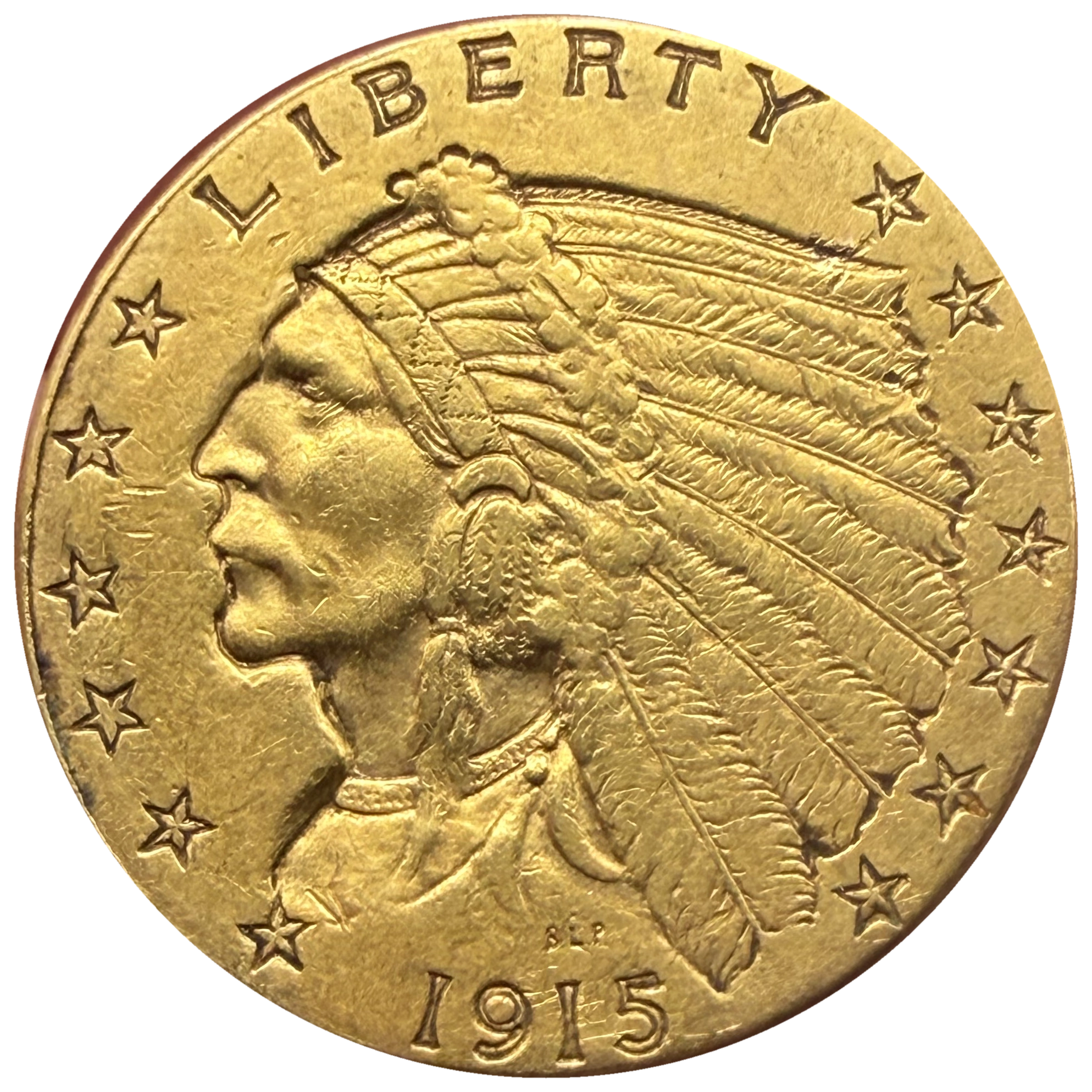
The 1915 Philadelphia quarter eagle closed the books on pre-war production of the Pratt $2.50, and not a single piece of the denomination would leave a United States mint over the nine years that followed. War had broken out in Europe the previous August, and by 1915 American gold reserves were being drawn into international finance at a pace that would only accelerate once the United States entered the conflict in 1917. Treasury planners shifted bullion toward larger denominations and toward the bars and bonds that financed Allied purchases, and small gold coins were judged unnecessary for ordinary commerce now that paper currency and silver had absorbed most of the daily transactional load. The 606,100-coin output looked respectable on its face, but no quarter eagle would follow it until 1925.
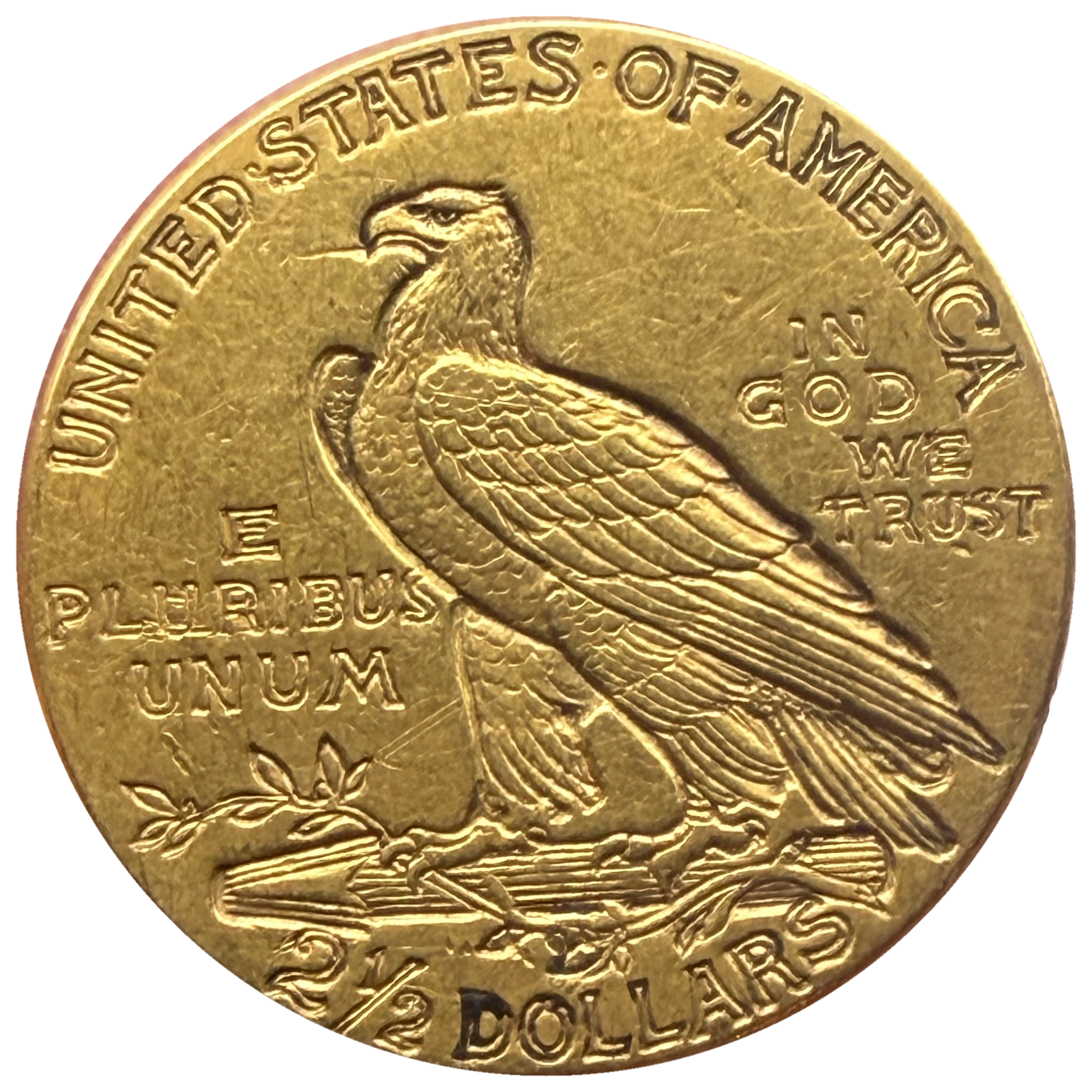
Authentication starts with the weight standard of 4.18 grams, a figure that cast counterfeits routinely undershoot by a tenth of a gram or more once internal porosity is accounted for. The incused design gives the authenticator strong tools because Pratt's recessed devices defeat the casting techniques that work against raised-relief coins. Genuine feathers in the headdress and plumage on the reverse eagle should drop cleanly into the planchet with sharp vertical walls and original mint luster surviving in the protected recesses. Cast forgeries betray themselves with rounded, soft edges along these incused boundaries and dull, granular interiors where the bright field of a struck coin should appear. The 18 mm diameter and reeded edge both verify quickly.
Modern collectors treat the 1915 as a date that anchors a complete Pratt run without commanding a key-date premium. Circulated examples remain available at modest markups over gold value, while uncirculated pieces with original surfaces and unbroken luster trade at multiples that climb steeply through the higher mint state grades. The historical weight of the date, sitting as it does at the threshold of a nine-year production gap, gives it a story that pure mintage figures fail to convey, and that history has begun to draw collector attention back to a coin long passed over for the lower-mintage issues that surround it. See the full Indian Head Quarter Eagle series history.
Reference data only — not an appraisal.
| Grade | Description | Low | High |
|---|---|---|---|
| G-4 | Good (G) | — | — |
| VG-8 | Very Good (VG) | — | — |
| F-12 | Fine (F) | — | — |
| VF-20 | Very Fine (VF) | $575 | $665 |
| EF-40 | Extremely Fine (EF) | $595 | $685 |
| AU-50 | About Uncirculated (AU) | $615 | $705 |
| MS-60 | Uncirculated (MS) | $630 | $730 |
| MS-63 | Choice Uncirculated (MS) | $1,440 | $1,525 |
How much is a 1915 Indian Head Gold $2.5 Quarter Eagle worth?
How many 1915 Indian Head Gold $2.5 Quarter Eagles were minted?
What is a 1915 Indian Head Gold $2.5 Quarter Eagle made of?
What is the melt value of a 1915 Indian Head Gold $2.5 Quarter Eagle?
Is the 1915 Indian Head Gold $2.5 Quarter Eagle a key date?
Live listings from eBay. As an eBay Affiliate, Collector's Key may be compensated if you click a link and make a purchase. See all on eBay →
It is important that you educate yourself on a coin before making a substantial purchase, as some coins on eBay could be counterfeit or misrepresented. eBay Money Back Guarantee protects the buyer in these cases.