As an eBay Affiliate, Collector's Key may be compensated if you make a purchase through the link(s) above.
1928
| Weight | 4.18 g |
| Diameter | 18 mm |
| Mint | Philadelphia |
| Strike | Circulation strike |
| Mintage | 416,000 |
| Edge | Reeded |
| Alignment | ↑↓ Coin |
| Composition | 90% Gold, 10% Copper |
| Melt value | — |
| Designer | Bela Lyon Pratt |
| Collector's Key ID | CK-5613 |
Collection
Your collection
Sign in to track this coin.
One tap — add details later from your collection list.
No additional varieties recorded for this strike.
External references
Last edited: April 25, 2026
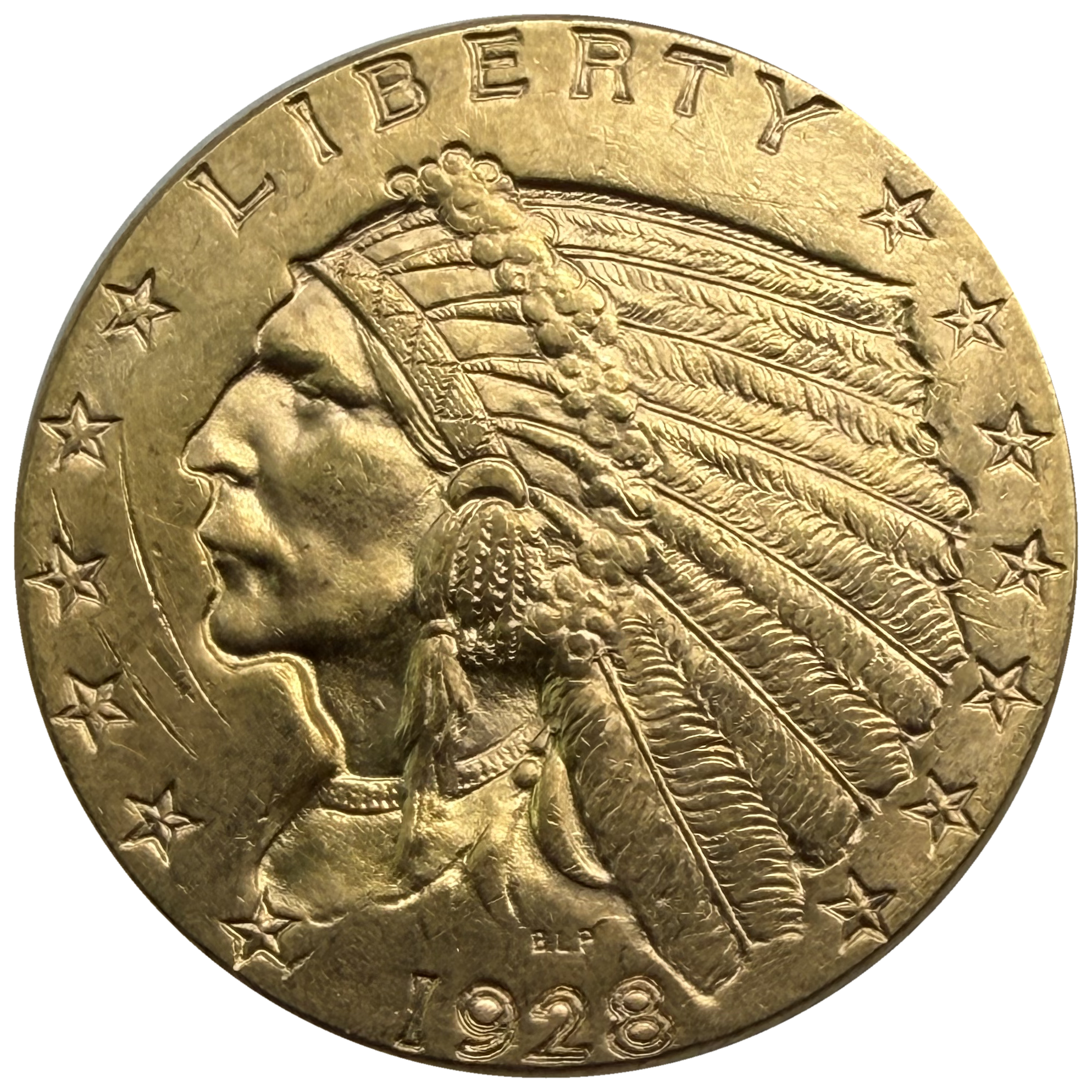
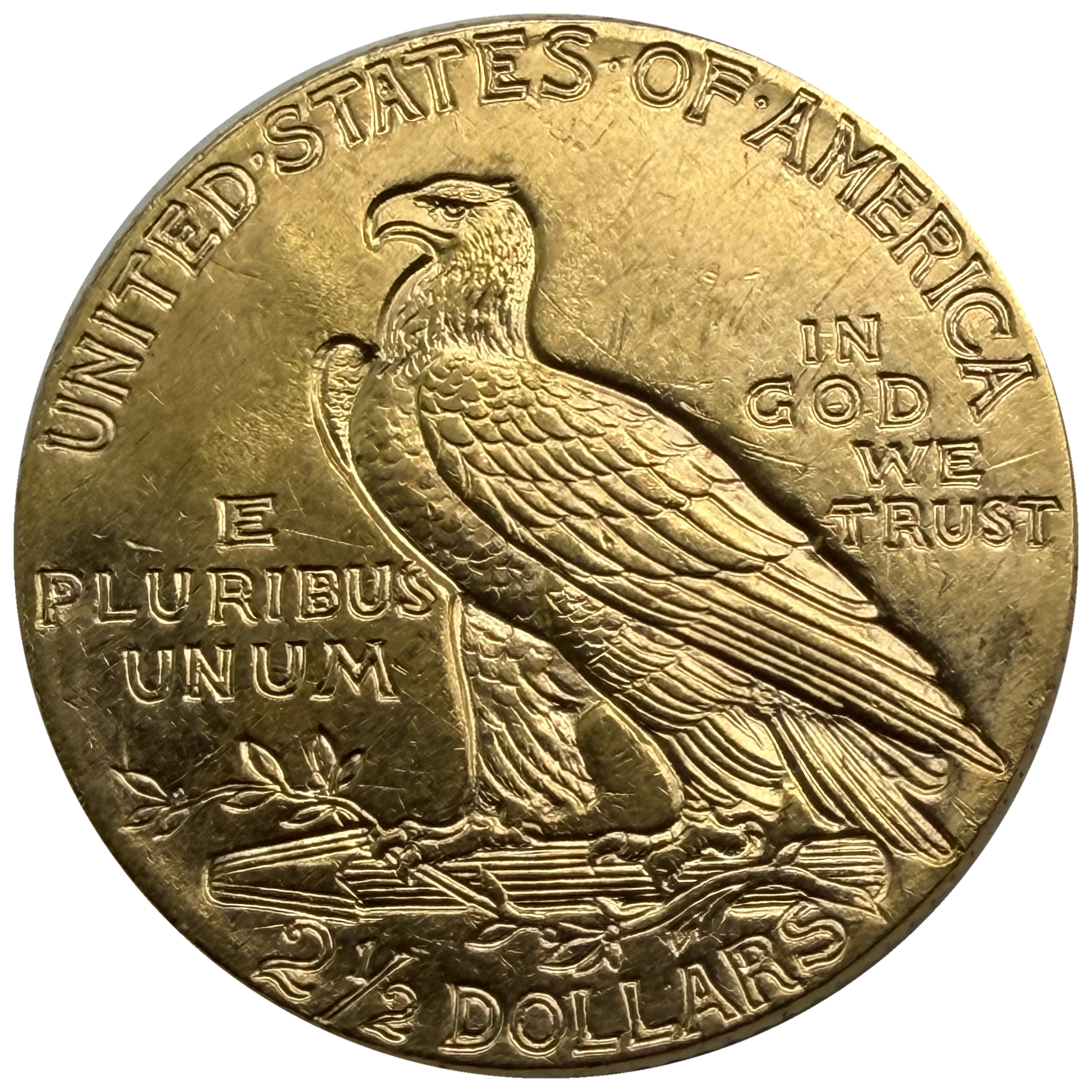
By 1928 the quarter eagle had become a coin out of step with the country it served. Calvin Coolidge was finishing a presidency built on Federal Reserve notes and personal checks, and the small gold piece functioned chiefly as a holiday gift, a jeweler's blank, and a vehicle for sentimental hoarding rather than a working unit of commerce. The 416,000 pieces struck at Philadelphia represented the second-lowest annual output of the post-war restart, and the figure understates how thoroughly the denomination had drifted from circulation. Bags moved from the Mint into bank vaults, sat undisturbed for months, and emerged largely at year-end when retail bullion demand spiked around Christmas. Treasury planners understood that the $2.50 was kept in production largely out of statutory inertia, and the strike continued a winding-down nobody at the Bureau chose to announce publicly. Pratt's twenty-year-old incused design ran out from dies that no longer attracted controversy, leaving this date to mark the penultimate year of an iconic but exhausted series.
Authentication of a 1928 begins with the 4.18 gram weight standard, a benchmark that cast counterfeits routinely miss by a tenth of a gram or more once internal porosity from the casting process is accounted for. The incused design supplies the most powerful tool in the series because Pratt's recessed devices are difficult to reproduce convincingly through cast techniques. Genuine feathers in the headdress, sunken plumage on the reverse eagle, and depressed inscription letters should drop cleanly into the planchet with sharp vertical walls and original luster preserved within the protected recesses. Cast forgeries betray themselves through rounded boundaries along these incused features, granular interiors where struck-coin brilliance should appear, and faint mold seams along the reeded edge.
For modern collectors, the 1928 occupies a comfortable middle position among Philadelphia issues of the late series, more elusive than the 1926 yet considerably more obtainable than the 1911-D or 1914 keys. Circulated survivors trade at modest markups over melt, while uncirculated examples climb steeply once original surfaces and undisturbed luster enter the equation. Gem-tier pieces are scarcer than mintage figures suggest, since the smooth fields of Pratt's design display contact marks unforgivingly and most surviving examples carry the bag-handling abrasions typical of vault-stored gold. See the full Indian Head Quarter Eagle series history.
Reference data only — not an appraisal.
| Grade | Description | Low | High |
|---|---|---|---|
| G-4 | Good (G) | — | — |
| VG-8 | Very Good (VG) | — | — |
| F-12 | Fine (F) | — | — |
| VF-20 | Very Fine (VF) | $575 | $665 |
| EF-40 | Extremely Fine (EF) | $595 | $685 |
| AU-50 | About Uncirculated (AU) | $615 | $705 |
| MS-60 | Uncirculated (MS) | $630 | $730 |
| MS-63 | Choice Uncirculated (MS) | $1,080 | $1,140 |
How much is a 1928 Indian Head Gold $2.5 Quarter Eagle worth?
How many 1928 Indian Head Gold $2.5 Quarter Eagles were minted?
What is a 1928 Indian Head Gold $2.5 Quarter Eagle made of?
What is the melt value of a 1928 Indian Head Gold $2.5 Quarter Eagle?
Is the 1928 Indian Head Gold $2.5 Quarter Eagle a key date?
Live listings from eBay. As an eBay Affiliate, Collector's Key may be compensated if you click a link and make a purchase. See all on eBay →
It is important that you educate yourself on a coin before making a substantial purchase, as some coins on eBay could be counterfeit or misrepresented. eBay Money Back Guarantee protects the buyer in these cases.