As an eBay Affiliate, Collector's Key may be compensated if you make a purchase through the link(s) above.
1929
| Weight | 4.18 g |
| Diameter | 18 mm |
| Mint | Philadelphia |
| Strike | Circulation strike |
| Mintage | 532,000 |
| Edge | Reeded |
| Alignment | ↑↓ Coin |
| Composition | 90% Gold, 10% Copper |
| Melt value | — |
| Designer | Bela Lyon Pratt |
| Collector's Key ID | CK-5614 |
Collection
Your collection
Sign in to track this coin.
One tap — add details later from your collection list.
No additional varieties recorded for this strike.
External references
Last edited: April 9, 2026
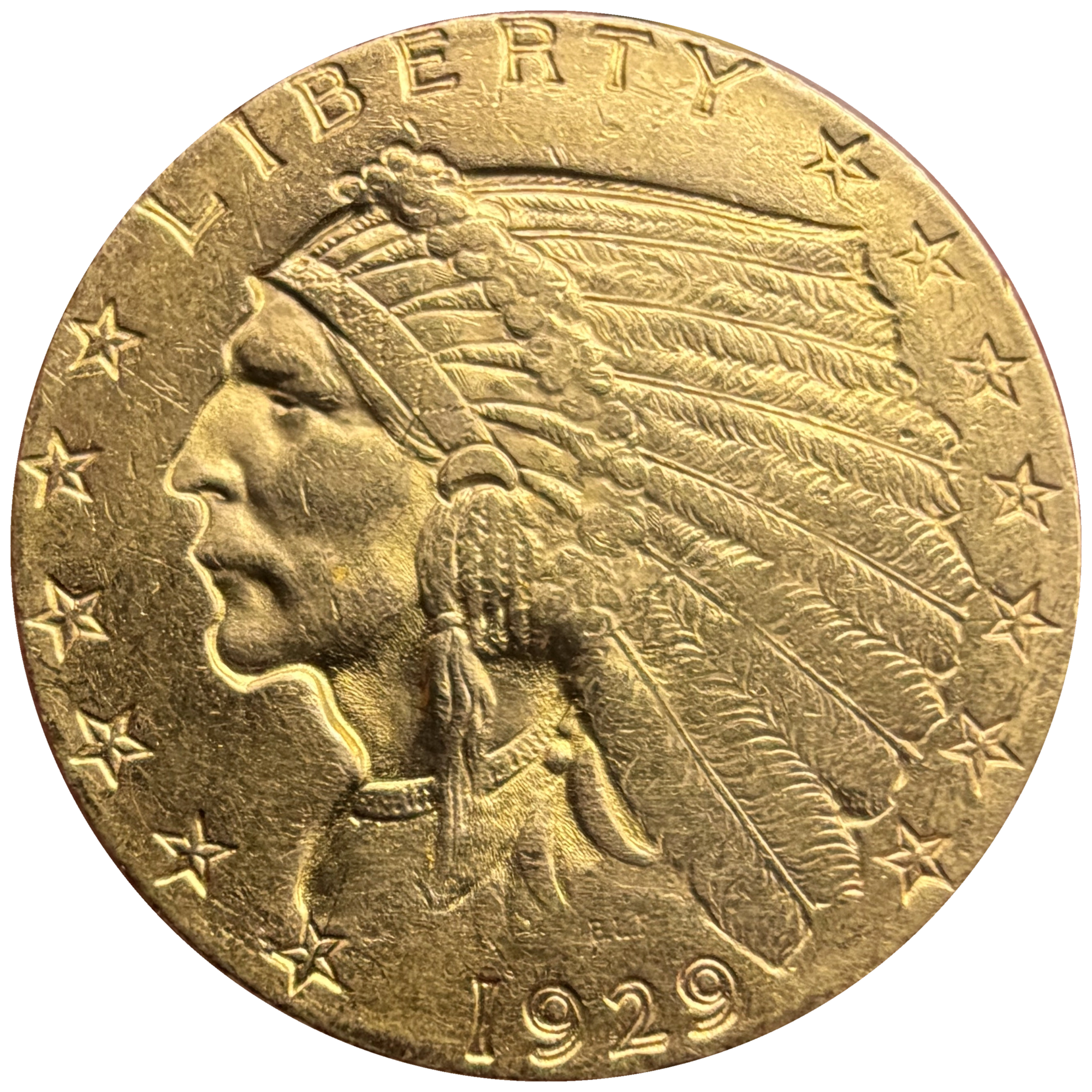
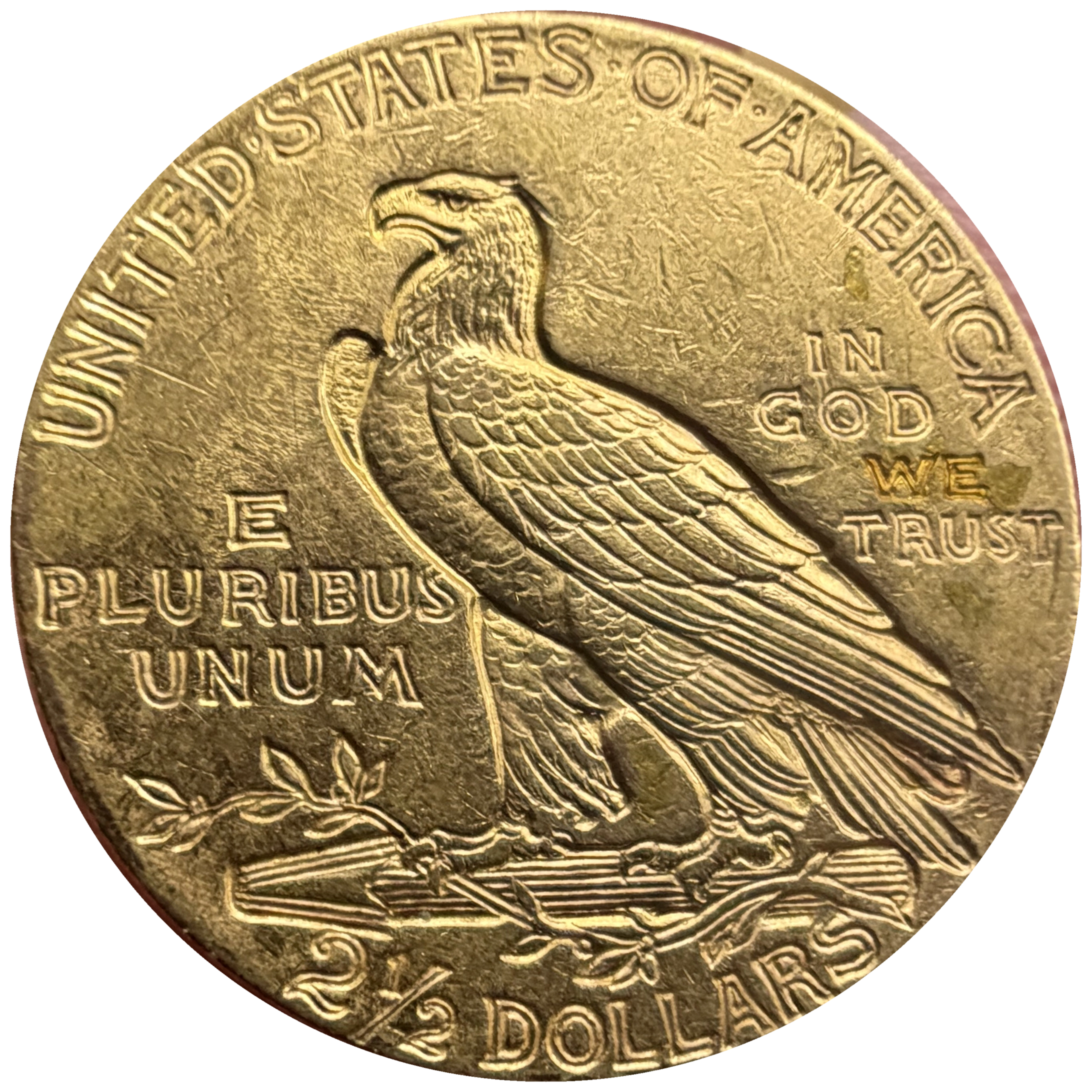
The 1929 quarter eagle closed a denomination that had run continuously since 1796, ending the Pratt incused design and the entire $2.50 gold series in a single year. Philadelphia struck 532,000 pieces before the line went silent, and the timing could hardly have been worse for the survival of original examples. The October stock market crash arrived months after most of the year's coinage had already moved into bank vaults, and the financial collapse that followed gave way within four years to Executive Order 6102. Roosevelt's 1933 gold recall pulled enormous quantities of late-issue gold back to the Treasury for melting, and the 1929 quarter eagle suffered disproportionately because so much of its mintage was still sitting in original mint bags and bank reserves rather than dispersed through circulation. The mintage figure looks comfortable on paper, but original-condition pieces are noticeably less common than the number suggests.
Authentication starts with the weight standard of 4.18 grams, which cast counterfeits routinely miss because the recessed Pratt design traps air bubbles during casting and produces planchets that come in light, heavy, or porous. Genuine incused devices show sharp vertical walls dropping cleanly into the surrounding field, with original mint frost surviving inside the recesses where contact wear cannot reach. Cast fakes betray themselves through soft, rounded edges along the headdress feathers and eagle plumage, and they almost always show a granular or pebbled texture inside the design recesses where the genuine coin shows reflective metal. Verify the 18 mm diameter and check the reeded edge for crisp, evenly spaced reeds rather than the soft or partially formed edges typical of cast work. Medal alignment should hold true when the coin is rotated top to bottom.
Modern collectors pursue the 1929 for its terminal-year status and its place at the literal end of US quarter eagle production. Circulated examples remain available at modest premiums tied to gold content, but uncirculated pieces with original surfaces have firmed up steadily as the 1933 melt context has become better understood among buyers. Gem material trades at meaningful premiums to common-date Pratts, and any 1929 with full original luster and clean fields deserves a careful look before being treated as bullion. See the full Indian Head Quarter Eagle series history.
Reference data only — not an appraisal.
| Grade | Description | Low | High |
|---|---|---|---|
| G-4 | Good (G) | — | — |
| VG-8 | Very Good (VG) | — | — |
| F-12 | Fine (F) | — | — |
| VF-20 | Very Fine (VF) | $575 | $665 |
| EF-40 | Extremely Fine (EF) | $595 | $685 |
| AU-50 | About Uncirculated (AU) | $615 | $705 |
| MS-60 | Uncirculated (MS) | $630 | $730 |
| MS-63 | Choice Uncirculated (MS) | $1,080 | $1,140 |
How much is a 1929 Indian Head Gold $2.5 Quarter Eagle worth?
How many 1929 Indian Head Gold $2.5 Quarter Eagles were minted?
What is a 1929 Indian Head Gold $2.5 Quarter Eagle made of?
What is the melt value of a 1929 Indian Head Gold $2.5 Quarter Eagle?
Is the 1929 Indian Head Gold $2.5 Quarter Eagle a key date?
Live listings from eBay. As an eBay Affiliate, Collector's Key may be compensated if you click a link and make a purchase. See all on eBay →
It is important that you educate yourself on a coin before making a substantial purchase, as some coins on eBay could be counterfeit or misrepresented. eBay Money Back Guarantee protects the buyer in these cases.