As an eBay Affiliate, Collector's Key may be compensated if you make a purchase through the link(s) above.
1802 Reverse of 1800
| Weight | 5.44 g |
| Diameter | 23.5 mm |
| Mint | Philadelphia |
| Strike | Circulation strike |
| Mintage | 20,266 Combined mintage for all 1802 varieties |
| Edge | Plain |
| Alignment | ↑↓ Coin |
| Composition | 100% Copper |
| Melt value | — |
| Designer | Robert Scot |
| Collector's Key ID | CK-19 |
Collection
Your collection
Sign in to track this coin.
One tap — add details later from your collection list.
Other recorded varieties for 1802:
- 1802 Reverse of 1802 · 1802/0 Reverse of 1802
External references
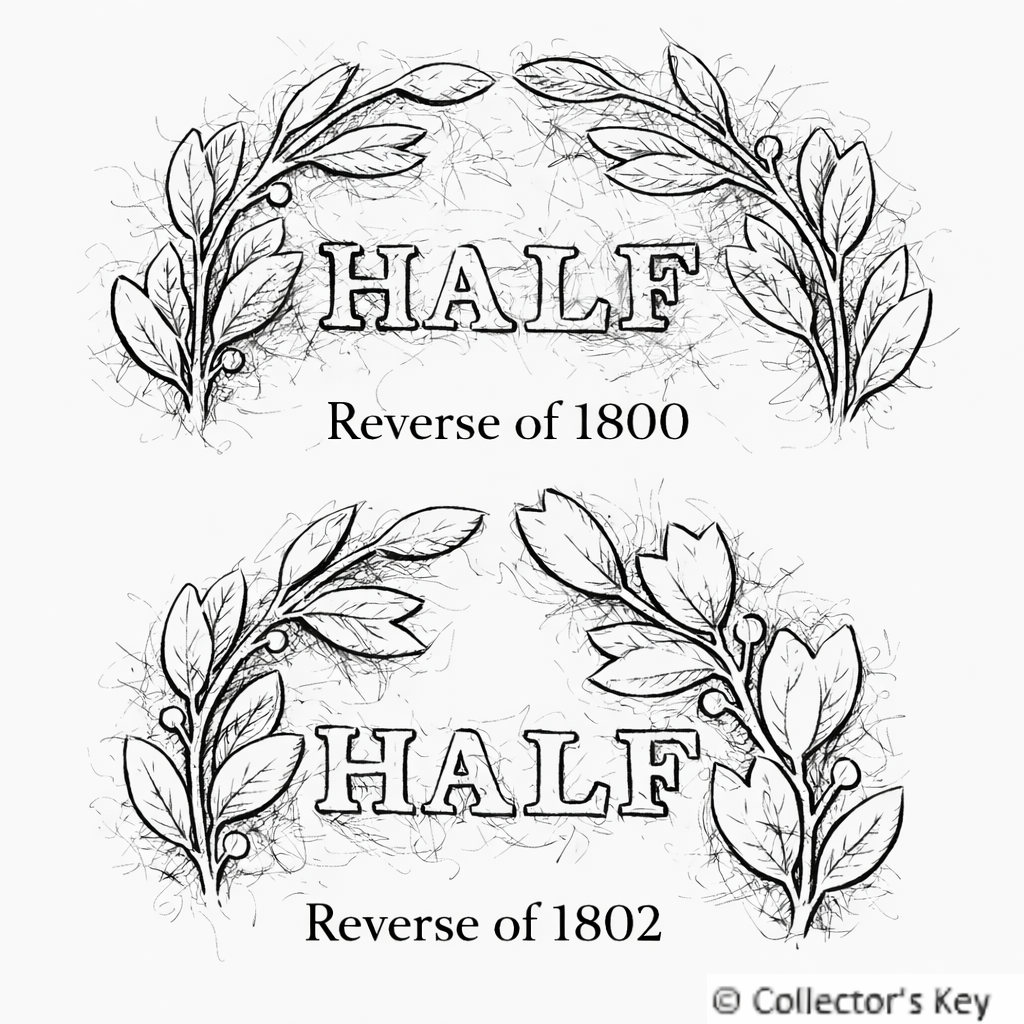
Reverse of 1800 (top) vs Reverse of 1802 (bottom): note the differences in wreath leaf spacing and letter style.
The 1802 half cent is a key date in the Draped Bust series, with a combined mintage of only 20,266 coins across both reverse varieties. No half cents were struck in 1801, another gap in production caused by the Mint's chronic copper supply problems, making the 1802 the first half cent delivery in two years. The low mintage reflects the same constraints that had caused the interruption: copper was expensive, the Mint had other priorities, and the half cent was always last in line.
The "Reverse of 1800" designation refers to coins struck using a reverse die originally prepared for 1800 production. The Mint routinely reused dies across multiple years, and the distinguishing features between the 1800-style reverse and the 1802-style reverse are in the details of the wreath and lettering. The wreath stems on the Reverse of 1800 are thinner and more delicate, and the fraction 1/200 beneath the denomination is positioned slightly differently. These are not differences most people would notice without a reference image, but they are consistent and well-documented in the Cohen catalog.
With only 20,266 total coins struck in 1802, divided between two reverse types, both varieties are genuinely scarce. The Reverse of 1800 is typically cited as the scarcer of the two, though estimates vary depending on the census consulted. Survivors number in the low hundreds at best, and most are in lower grades. The coin circulated in an economy where a half cent still had real purchasing power, and the soft copper composition wore quickly under daily use.
Finding an 1802 Reverse of 1800 in any condition requires patience. Finding one in Fine or better with original surfaces and no significant problems — no cleaning, no corrosion, no old repairs — is a genuine challenge. Auction appearances are infrequent enough that specialists track them, and prices reflect both the coin's rarity and its importance as a key date in one of the most collected early American series.
Reference data only — not an appraisal.
| Grade | Description | Low | High |
|---|---|---|---|
| G-4 | Good (G) | $17,555 | $20,255 |
| VG-8 | Very Good (VG) | $25,575 | $29,510 |
| F-12 | Fine (F) | $43,125 | $49,755 |
| VF-20 | Very Fine (VF) | $60,220 | $69,485 |
| EF-40 | Extremely Fine (EF) | $113,595 | $131,075 |
| AU-50 | About Uncirculated (AU) | — | — |
| MS-60 | Uncirculated (MS) | — | — |
| MS-63 | Choice Uncirculated (MS) | — | — |
How much is a 1802 Reverse of 1800 Draped Bust Half Cent worth?
How many 1802 Reverse of 1800 Draped Bust Half Cents were minted?
What is a 1802 Reverse of 1800 Draped Bust Half Cent made of?
What is the melt value of a 1802 Reverse of 1800 Draped Bust Half Cent?
Is the 1802 Reverse of 1800 Draped Bust Half Cent a key date?
Live listings from eBay. As an eBay Affiliate, Collector's Key may be compensated if you click a link and make a purchase. See all on eBay →
It is important that you educate yourself on a coin before making a substantial purchase, as some coins on eBay could be counterfeit or misrepresented. eBay Money Back Guarantee protects the buyer in these cases.