As an eBay Affiliate, Collector's Key may be compensated if you make a purchase through the link(s) above.
1802 Reverse of 1802
| Weight | 5.44 g |
| Diameter | 23.5 mm |
| Mint | Philadelphia |
| Strike | Circulation strike |
| Mintage | 20,266 Combined mintage for all 1802 varieties |
| Edge | Plain |
| Alignment | ↑↓ Coin |
| Composition | 100% Copper |
| Melt value | — |
| Designer | Robert Scot |
| Collector's Key ID | CK-20 |
Collection
Your collection
Sign in to track this coin.
One tap — add details later from your collection list.
Other recorded varieties for 1802:
- 1802 Reverse of 1800 · 1802/0 Reverse of 1800
External references
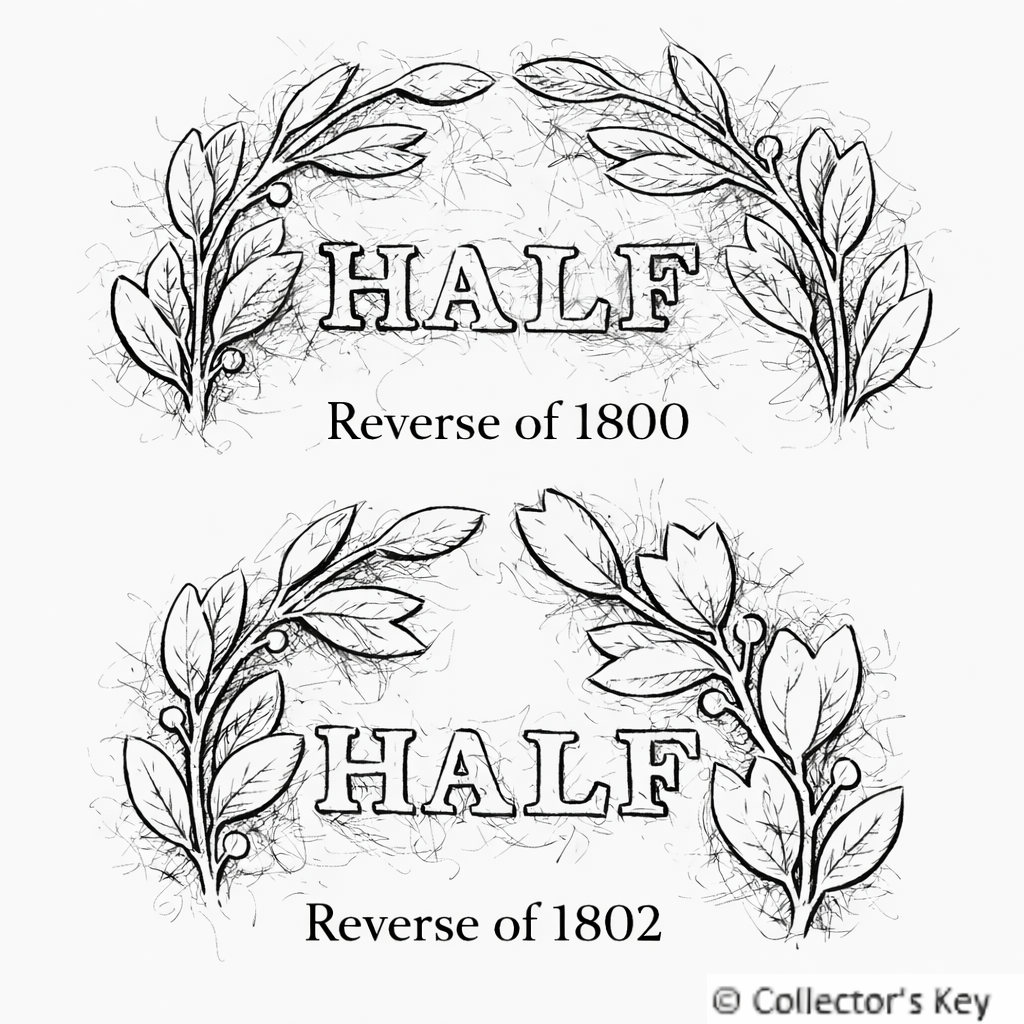
Reverse of 1800 (top) vs Reverse of 1802 (bottom): note the differences in wreath leaf spacing and letter style.
The 1802 Reverse of 1802 half cent shares the date's minuscule mintage of 20,266 coins but was struck from a die pair that includes a reverse prepared specifically for 1802 production. The differences from the Reverse of 1800 die involve the wreath construction and lettering positioning: slightly bolder stems, a different arrangement of the berries within the wreath, and minor shifts in the placement of HALF CENT and the fraction 1/200.
Separating the two reverse types requires either a trained eye or a reference image. The Cohen catalog provides detailed illustrations, and major grading services attribute the reverse type on certified coins. For raw coins purchased at shows or through dealers, knowing the diagnostics, or working with a dealer who does, is essential, because the market values the two varieties differently despite their shared date and mintage.
The Reverse of 1802 is generally considered the more available of the two varieties, though "more available" applied to a coin with a total mintage under 21,000 and a survival rate measured in hundreds means that finding one still requires effort. Most examples grade between About Good and Fine, with the typical brown surfaces and minor problems that characterize early copper. A coin in Very Fine or better is a condition rarity. There simply were not enough made for many to survive in high grades, and the ones that did were often cleaned or damaged before the modern era of conservation awareness.
The two-year production gap before 1802 and the low output in the year itself tell a story about the half cent's precarious place in the early Mint's operations. The denomination was authorized by law, demanded by commerce, and consistently neglected by an institution that lacked the copper and the press time to produce it reliably. The 1802 dates are the physical evidence of that neglect — rare coins not because they were special, but because the Mint barely bothered to make them.
Reference data only — not an appraisal.
| Grade | Description | Low | High |
|---|---|---|---|
| G-4 | Good (G) | $770 | $890 |
| VG-8 | Very Good (VG) | $1,800 | $2,075 |
| F-12 | Fine (F) | $3,715 | $4,290 |
| VF-20 | Very Fine (VF) | $8,935 | $10,310 |
| EF-40 | Extremely Fine (EF) | $15,985 | $18,445 |
| AU-50 | About Uncirculated (AU) | — | — |
| MS-60 | Uncirculated (MS) | — | — |
| MS-63 | Choice Uncirculated (MS) | — | — |
How much is a 1802 Reverse of 1802 Draped Bust Half Cent worth?
How many 1802 Reverse of 1802 Draped Bust Half Cents were minted?
What is a 1802 Reverse of 1802 Draped Bust Half Cent made of?
What is the melt value of a 1802 Reverse of 1802 Draped Bust Half Cent?
Is the 1802 Reverse of 1802 Draped Bust Half Cent a key date?
Live listings from eBay. As an eBay Affiliate, Collector's Key may be compensated if you click a link and make a purchase. See all on eBay →
It is important that you educate yourself on a coin before making a substantial purchase, as some coins on eBay could be counterfeit or misrepresented. eBay Money Back Guarantee protects the buyer in these cases.